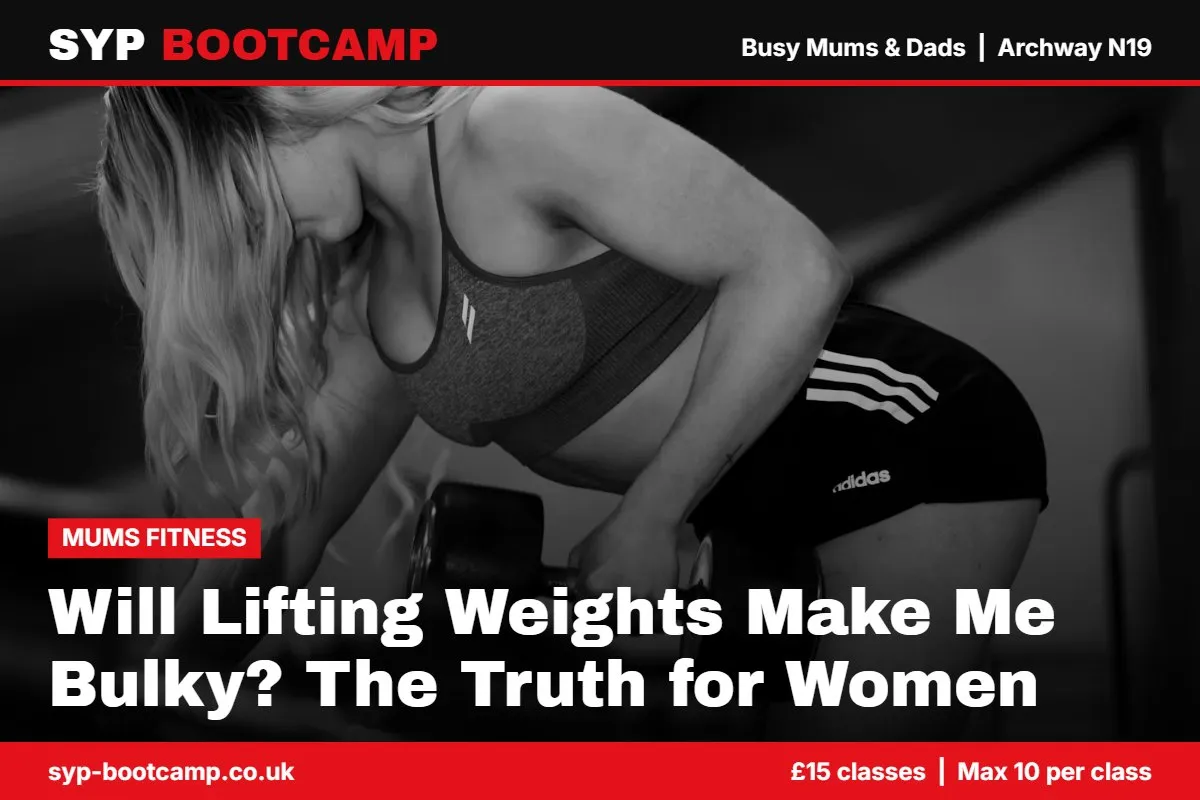
Will Lifting Weights Make Me Bulky? The Truth for Women
“I want to get stronger, but I do not want to get bulky.” I hear this from mums more than almost anything else. It is usually said with a worried glance at the dumbbell rack. So let me answer the question properly: will lifting weights make me bulky? For the vast majority of women, no. What it will do is make you stronger, firmer and more capable of carrying a sleeping five-year-old up the stairs without your back complaining.
Here is why the bulky worry is mostly a myth, what lifting actually does, and a simple beginner plan to get you started.
Will lifting weights make me bulky? The short answer
Building large, visible muscle takes a combination of things most women are not doing by accident:
- Years of training specifically aimed at growing muscle, often with high volumes of work.
- Eating in a calorie surplus for long periods, deliberately.
- Hormones that favour muscle growth. Women generally have much lower testosterone levels than men, which is one reason muscle builds more slowly.
- Genetics, which vary from person to person.
The women you see on stage at bodybuilding shows have usually trained very hard for years, followed strict diets and peaked for that one day. That look does not happen from two strength sessions a week and a busy family life.
So why do some women feel “bulkier” when they start?
This is a fair question, because some women do notice changes in the first few weeks. The usual reasons:
- Muscles hold more water and stored energy when you start training, so they can feel fuller for a while.
- Appetite can go up with more activity. If you eat a lot more, the scales and your clothes may change.
- Muscle can grow a bit before body fat changes, so you might feel firmer before you look different.
None of this is the same as getting “bulky”. Over a few months, most women describe looking more toned and feeling stronger. I cannot promise how your body will change, because everyone responds differently, but I can promise that a sensible strength plan will not turn you into a bodybuilder by accident.
What lifting weights actually does for mums
The NHS recommends adults do strength exercises on at least 2 days a week, working all the major muscle groups. For busy parents, the benefits are very practical:
- Easier daily life. Lifting kids, car seats, shopping and buggies all get easier.
- Stronger bones. Strength training puts healthy stress on your bones, which matters more as you approach the menopause.
- Better posture and fewer aches. A stronger back and hips cope better with long days.
- Confidence. There is something about lifting a weight you could not lift a month ago that changes how you carry yourself.
If you are over 40, my post on strength training for mums over 40 explains why it becomes even more useful with age.
Light weights or heavy weights?
Many women stick to tiny pink dumbbells for years because they are worried about bulk. The problem is that once something is easy, your body has no reason to get stronger. “Heavy” simply means heavy for you. A good rule: choose a weight where the last 2 or 3 reps of a set feel hard but your form stays clean. When you can do all the reps comfortably, go a little heavier.
A beginner strength plan for women
Do this twice a week, with at least one day between sessions. It takes about 30 to 35 minutes. You need a pair of dumbbells or a kettlebell. If you have nothing, a backpack with some heavy books works to begin with.
Session A
- Goblet squat, 3 sets of 10. Hold the weight at your chest, sit between your heels and stand tall.
- Incline push-up, 3 sets of 8 to 10, hands on a bench or worktop.
- Romanian deadlift with dumbbells, 3 sets of 10. Push your hips back, keep your back flat and feel the stretch in your hamstrings.
- Dead bug, 3 sets of 6 each side.
Session B
- Reverse lunge, 3 sets of 8 each leg, holding dumbbells if you are steady.
- One-arm dumbbell row, 3 sets of 10 each side.
- Glute bridge, 3 sets of 12, with a weight on your hips once it gets easy.
- Farmer’s carry, 3 walks of 30 seconds holding a heavy weight in each hand.
Rest 60 to 90 seconds between sets. Warm up for 5 minutes first with marching, arm circles and a few bodyweight squats. Each week, try to add a rep or a little weight. That steady progression is what makes you stronger. For help with the squat itself, my goblet squat guide breaks it down step by step, and my post on strength training for women beginners covers what to expect in your first months.
If you are pregnant, recently postnatal, have joint pain, osteoporosis or any health condition, check with your GP or a physio before starting a new strength plan. After a birth, wait until your postnatal check, usually around 6 to 8 weeks, before lifting anything heavy.
Where a bootcamp class fits
Lots of women want to try lifting but feel nervous walking into the weights area of a busy gym. A small class is a much friendlier way in. You get a coach checking your form, you see other parents lifting, and you quickly learn what “challenging but doable” feels like. My SYP Built To Last functional strength class is built around exactly the kind of moves in the plan above.
FAQs
Will lifting weights make women bulky?
For most women, no. Building large muscles takes years of specific training, a deliberate calorie surplus and hormones that favour muscle growth. Two sessions a week will make you stronger, not bulky.
Should women lift heavy or light weights?
Lift weights that feel challenging for you, where the last few reps are hard but your form is good. Too light and your body has no reason to adapt.
How often should a woman lift weights?
The NHS recommends strength exercises on at least 2 days a week. Two full-body sessions is a great start for beginners.
Why do I feel bigger after starting weights?
Early on, muscles hold more water and you may feel fuller or more pumped after training. This usually settles, and over time most women feel firmer and stronger.
Book your first class
If you want to learn to lift with a coach beside you, come and try SYP Bootcamp. Classes are 45 minutes, held indoors in a church hall in Archway N19, with a maximum of 10 people and £15 a class. Every exercise has an easier and harder option. Book your £15 class here or call or WhatsApp me on 07301 512215. If you would rather have a strength plan built around your goals, take a look at The Transformation programme at SYP Fitness.
About the author
Artem Olekhnovych is a personal trainer in Archway and the founder of SYP Fitness and SYP Bootcamp. He has coached clients in Archway, Highgate and across North London for over 10 years, and runs small-group bootcamp classes for busy mums and dads. Read reviews from his 1-1 clients.
