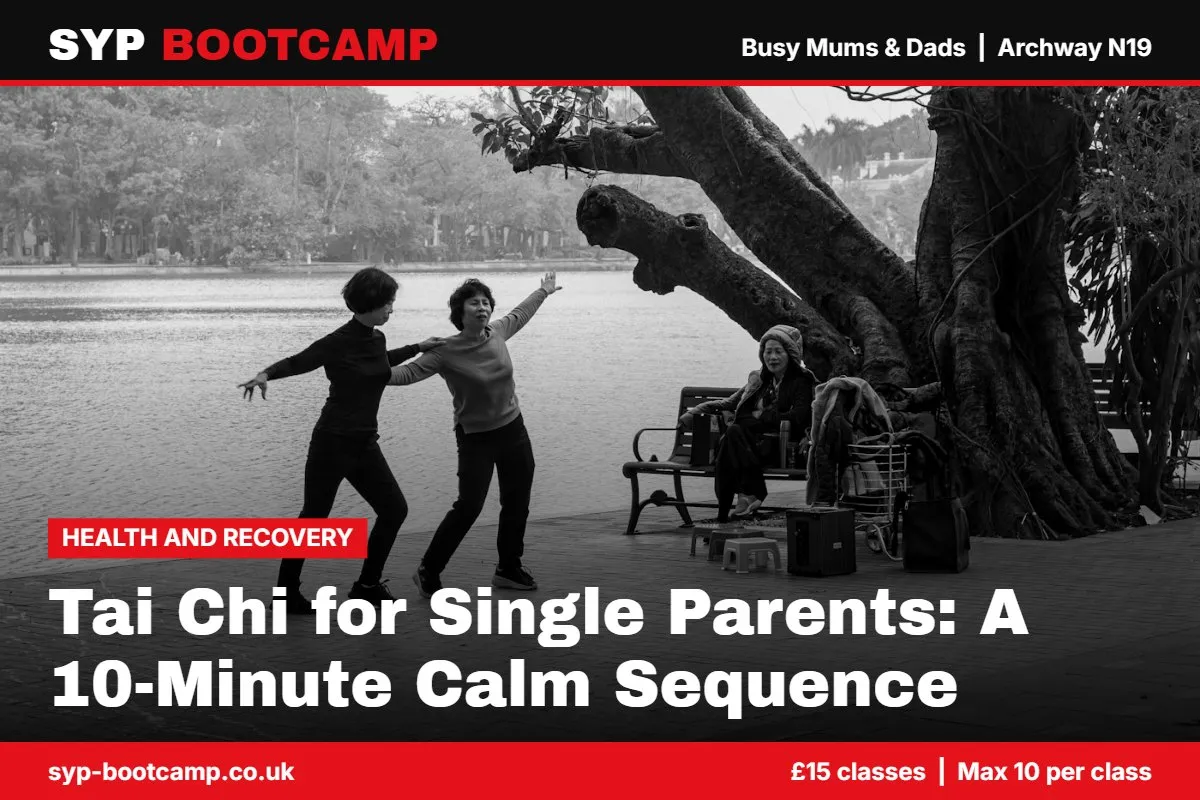
Tai Chi for Single Parents: A 10-Minute Calm Sequence
Some days the last thing a stressed solo parent needs is to be shouted at by a fitness instructor to “push harder”. You have been pushing all day. If your shoulders live up by your ears and your mind will not switch off after bedtime, slow movement might do more for you right now than another sweaty workout. That is where tai chi for single parents comes in. It is calm, quiet, needs no kit and no childcare, and you can learn a short sequence in your living room tonight.
I am a strength coach, so you might be surprised I am writing about tai chi. But I see what stress does to the parents I coach in Archway, and I think slow, mindful movement deserves a place in a busy week alongside strength work.
What tai chi is (and is not)
Tai chi is a Chinese practice of slow, flowing movements linked with steady breathing. You shift your weight smoothly from foot to foot while your arms move through soft, circular shapes. There are many styles and long “forms”, but you do not need to learn a full form to get something from it. A few simple movements, done slowly and with attention, are enough to start.
What it is good for:
- Calming your nervous system. Slow breathing and steady, repetitive movement can help you feel less wound up. The NHS includes being active and relaxation techniques in its tips to reduce stress.
- Balance. Constant, controlled weight shifts train your balance. The NHS includes a tai chi style move among its balance exercises.
- Gentle mobility. Your hips, spine and shoulders move through big, relaxed ranges without strain.
What it is not: a replacement for strength training or for proper support if you are struggling. If stress, low mood or anxiety are affecting your daily life, please talk to your GP. You can also refer yourself to NHS talking therapies.
A 10-minute beginner tai chi sequence
Find a space about two big steps wide. Bare feet or socks with grip. Knees soft throughout, never locked. Breathe in through your nose and out slowly through your mouth. Move at about half the speed you think you should.
1. Settle (1 minute)
Stand with feet hip-width apart, knees soft, arms by your sides. Imagine a thread gently lifting the top of your head. Let your shoulders drop. Take six slow breaths, making each out-breath a little longer than the in-breath.
2. Raising the arms (1 minute)
Breathing in, float both arms up in front of you to shoulder height, wrists soft, as if they are rising through water. Breathing out, press them gently back down as you bend your knees slightly. Repeat 6 to 8 times.
3. Weight shift (2 minutes)
Step your feet a little wider. Slowly shift your weight into your right leg until your left foot feels light, then flow across to the left. Keep your head level, as if balancing a cup of tea on it. This is the heart of tai chi. Do 10 slow shifts each way.
4. Cloud hands (2 minutes)
As you shift your weight to the right, let your right hand drift across in front of your face and your left hand sweep low across your belly, like wiping a big window in slow motion. As you shift left, the hands swap. Your waist turns gently with your hands. Do 8 slow sweeps each way.
5. Brush knee and push (2 minutes)
Step your left foot forward to the heel, then roll onto the whole foot as you shift your weight forward. At the same time, your left hand sweeps down past your left knee and your right hand pushes gently forward at chest height. Step back to centre and repeat on the other side. Do 5 each side.
6. Closing (2 minutes)
Bring your feet back to hip-width. Float your arms up as you breathe in, then lower them as you breathe out, letting your hands come to rest on your lower belly. Stand still for a minute and notice your breathing.
Tai chi for single parents: fitting it into real life
- The after-bedtime wind-down. Ten minutes before you sit on the sofa with your phone. Many parents tell me this helps them actually feel the end of the day.
- With the kids. Young children often love “slow motion” games. Call it “moving like a cloud” and let them copy. It can calm a wild evening.
- In the park. Early mornings in quiet spots in Waterlow Park or Highgate Wood are lovely while the kids play nearby, as long as they are in your sight.
- Before a stressful moment. Two minutes of weight shifts and slow breathing before a difficult phone call or school meeting.
For other ways to calm a busy head, my post on exercise for stress relief and my guide to breathing exercises for single parents are good next reads.
Where it fits with strength work
Here is how I would build a calm but effective week for a solo parent:
- 2 strength sessions (a class, or 20 minutes at home) for muscles, bones and energy.
- 3 to 5 short tai chi sessions of 10 minutes, on any day, especially stressful ones.
- Daily walking where you can, like the school run.
Strength and tai chi complement each other really well. Strength gives you the muscle, tai chi gives you the control and calm. If you carry a lot of tension, my SYP Release stress relief class goes the other way, letting it out on pads and slam balls, and many parents like having both. For more on fitting exercise in as the only adult at home, see my hub on single parent fitness.
FAQs
Is tai chi good for anxiety?
Many people find its slow breathing and gentle movement calming. It can be part of looking after your mental health, but it is not a treatment on its own. If anxiety is affecting your life, speak to your GP.
Can I learn tai chi from videos?
Yes, for simple movements like the ones above. If you get hooked, a local class with a qualified teacher will help you learn longer forms and correct your posture.
Does tai chi count as exercise?
It counts towards your activity and is especially useful for balance and flexibility. For most adults it works best alongside walking and strength training rather than replacing them.
Is tai chi safe if I have a health condition?
It is gentle and suits many people, but if you have a heart condition, joint problems, are pregnant or have balance issues, check with your GP or physio before you start.
Book your first class
When you want strength to sit alongside your calm, SYP Bootcamp runs 45-minute small-group classes in a weatherproof church hall in Archway N19, max 10 people, £15 a class, all levels welcome. Book your £15 class here or call or WhatsApp me on 07301 512215. If you live just down the road, here is how I work as a personal trainer in Tufnell Park.
About the author
Artem Olekhnovych is a personal trainer in Archway and the founder of SYP Fitness and SYP Bootcamp. He has coached clients in Archway, Highgate and across North London for over 10 years, and runs small-group bootcamp classes for busy mums and dads. Read reviews from his 1-1 clients.
