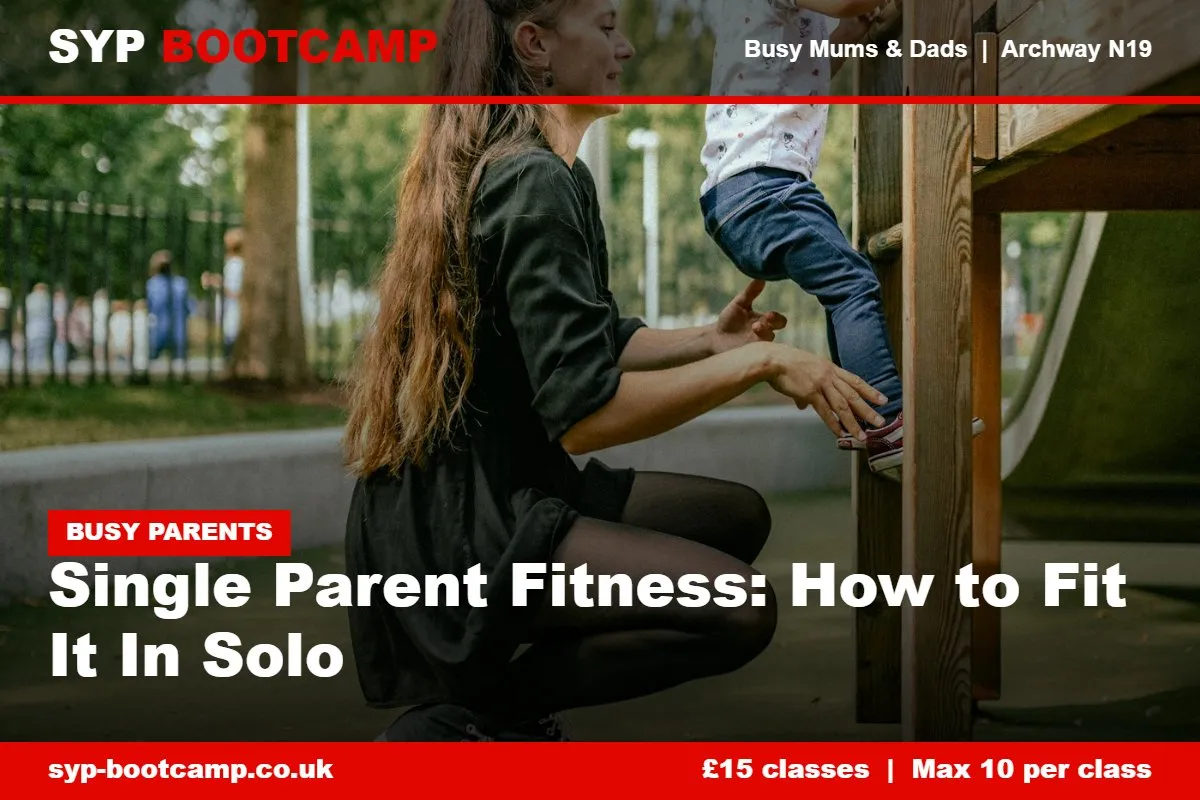
Single Parent Fitness: How to Fit It In Solo
When you are raising kids on your own, there is no one to hand the baby to while you nip out for a run. No one else does bath time on Tuesdays. Every bit of “me time” has to be found, negotiated or paid for. So when people say “just make time for exercise”, it can feel like they have no idea. This guide to single parent fitness is about what actually works when you are the only adult in the house most of the time: short sessions, kid-friendly options, and a few honest shortcuts.
Start with a realistic target
The NHS physical activity guidelines for adults recommend at least 150 minutes of moderate activity or 75 minutes of vigorous activity a week, plus strengthening activities on at least 2 days. That might sound like a lot, but it can be built from small pieces. The NHS also lists “lifting and carrying children” as a muscle-strengthening activity, so some of your daily life already counts.
For most single parents I speak to, a sensible first target is:
- 2 short strength sessions a week (15 to 30 minutes)
- Some brisk walking on most days, ideally built into journeys you already make
- One active family outing at the weekend
That is it. Get that working for a month before adding anything.
Single parent fitness: 7 ways to fit it in without childcare
- Train at home after bedtime. A 20-minute bodyweight session in the living room once the kids are asleep is the most reliable slot for many solo parents. Try my no equipment home workout.
- Make the school run count. Walk it briskly, or walk home the long way after drop-off. That is 20 to 30 minutes a day you were already spending.
- Train with the kids, not around them. Toddlers love joining in with squats and star jumps. Older kids can time you or race you. My post on exercising with your kids has plenty of ideas.
- Use the playground. While they play, do step-ups on a bench, incline push-ups against the climbing frame and walking lunges around the edge. You are there anyway.
- Use the time they are with your ex or family. If your kids spend regular time with their other parent or grandparents, protect one of those slots for a proper workout or class. Put it in the diary like an appointment.
- Do “snack” workouts. 5 minutes while the pasta boils: 10 squats, 10 push-ups against the kitchen worktop, 20 seconds plank. Repeat. It adds up.
- Swap screen time for active time together on one evening a week: a dance-off, a walk to the park or a kickabout.
A 20-minute after-bedtime workout
Quiet enough not to wake anyone. Do each exercise for 40 seconds, rest 20 seconds, and go round 3 times.
- Squats to a chair (harder: no chair, slower lowering)
- Push-ups against the worktop (harder: on a low step or the floor)
- Glute bridges (harder: one leg at a time)
- Reverse lunges holding a chair for balance (harder: no support)
- Dead bugs lying on your back, moving opposite arm and leg slowly
Look after the basics, too
Solo parenting is tiring in a way that is hard to explain. A few things make exercise much easier to stick to:
- Do not train on empty. A quick snack with some protein before an evening workout can help.
- Go easier on bad-sleep nights. A 10-minute walk or some stretching is a win on those days.
- Ditch the guilt. Looking after your health is part of looking after them. Kids copy what they see, and the NHS recommends children aged 5 to 18 get an average of at least 60 minutes of moderate or vigorous activity a day (see the NHS guidelines for children and young people). Being active together helps you both.
- Ask for help when you need it. If you are feeling low, anxious or overwhelmed, please talk to your GP. Exercise can be part of looking after yourself, but it is not a replacement for proper support.
Where a small-group bootcamp fits
For many single parents, the hardest bit is not the workout. It is the planning, the motivation and feeling like you are always on your own. A small group helps with all three. At SYP Bootcamp, classes are 45 minutes with a maximum of 10 people, indoors in a church hall in Archway, N19. You pay £15 per class with no contract, so you can book only the weeks when you have cover. Every exercise has easier and harder options, and you will meet other mums and dads juggling the same things. See this week’s class times on the booking page.
FAQs
How can a single mum get fit at home?
Short bodyweight sessions after bedtime, brisk walks on the school run and active play with the kids are the easiest place to start. Two 20-minute strength sessions a week is a realistic first goal.
Can I exercise with my kids around?
Yes. Choose exercises that are safe with little ones nearby, like squats, push-ups against a worktop and bridges, and keep weights or bands out of reach. Many kids enjoy joining in.
How do single parents find time to exercise?
By using time they already have: journeys, playground visits, after bedtime and any regular slots when the kids are with family. Small, regular sessions work better than waiting for a free hour.
Book your first class
If you have a regular evening or morning with cover, use it for you. Pick a time and tap “Book my £15 class” on the SYP Bootcamp booking page, or call or WhatsApp me on 07301 512215 with any questions. If you would like a programme built around your custody schedule and home setup, take a look at private personal training at SYP Fitness.
About the author
Artem Olekhnovych is a personal trainer in Archway and the founder of SYP Fitness and SYP Bootcamp. He has coached clients in Archway, Highgate and across North London for over 10 years, and runs small-group bootcamp classes for busy mums and dads. Read reviews from his 1-1 clients.
