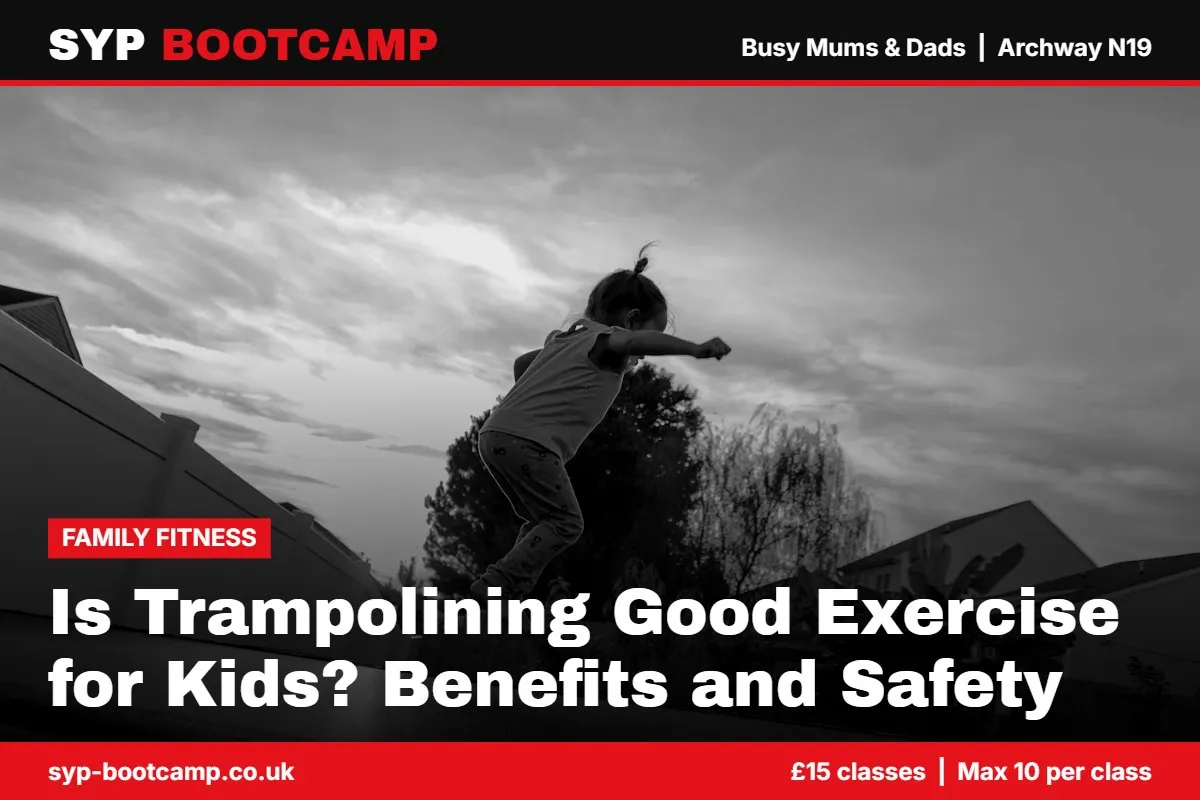
Is Trampolining Good Exercise for Kids? Benefits and Safety
If your children would bounce all day given the chance, you have probably wondered whether it is doing them any good, or whether it is just a noisy way to burn off sugar. Parents ask me this a lot, especially in autumn when the garden trampoline is the last outdoor thing still getting used. So, is trampolining good exercise for kids? In short, yes, it can be excellent. But the safety side matters just as much as the fitness side. Here is what I tell parents about both.
Is trampolining good exercise for kids? The benefits
From a coaching point of view, bouncing ticks a surprising number of boxes:
- Heart and lungs. Ten minutes of steady bouncing gets most children puffing. It counts towards the daily activity target in the NHS physical activity guidelines for children and young people, which suggest an average of at least 60 minutes a day across the week.
- Leg strength. Every bounce asks the legs to push and absorb. Children who bounce a lot often develop springy, powerful legs.
- Balance and body awareness. Staying upright on a moving surface trains the tiny stabilising muscles and teaches kids where their body is in space.
- Core control. Keeping the trunk steady while the legs work is real core training.
- Coordination. Timing arm swings with jumps, landing in the middle and changing shapes in the air all build skill.
- Mood. It is fun. Children who “hate exercise” often love bouncing, which is half the battle.
One thing I am honest about: the trampoline mat absorbs much of the landing impact. That is easier on joints, but it also means trampolining is not a full replacement for activities on firm ground. Running, skipping, hopping and jumping on grass help build strong bones too, so keep a mix.
Garden trampoline safety rules
Trampolines cause a lot of injuries in children every year, and most of them are avoidable. The Royal Society for the Prevention of Accidents has clear garden trampoline safety advice. The key points:
- One at a time. RoSPA says most injuries happen when more than one person is bouncing, and the lighter person is far more likely to be hurt. This is the rule most families break.
- Not for under 6s. RoSPA advises that trampolines are not suitable for children under six, who do not yet have the control needed.
- Use a safety net and padding. Netting stops children bouncing off and hitting the frame or springs. Padding should cover springs, hooks and the frame.
- Soft ground only. Place it on grass, bark or similar, never on concrete or patio slabs. Keep the area around it clear.
- No somersaults unless the child has been properly trained. Neck injuries are the ones every parent fears.
- No bouncing off. Climb out and down, do not jump out.
- Supervise, but do not rely on it. RoSPA notes that many accidents still happen with an adult watching, so the rules matter more than the watching.
Check the net, springs and mat at the start of each season and after storms. Wet mats are slippery, so wait for it to dry.
A 15-minute trampoline session with purpose
Free bouncing is great. But if your child likes a challenge, try this structured session. One child at a time, with others waiting their turn (and doing star jumps on the grass while they wait).
- Warm-up bounce (1 minute): small, controlled bounces in the centre, arms relaxed.
- Stop on command (2 minutes): you shout “freeze”, they bend the knees and stop dead. This “kill the bounce” skill is the most important safety skill on a trampoline.
- Tuck jumps (3 x 5): knees to chest, land in the middle. Rest between sets.
- Star jumps in the air (3 x 5): arms and legs out, then back together before landing.
- Seat drops (3 x 5, only if confident): land sitting with legs straight, then push back up to standing.
- Spot challenge (2 minutes): put a soft toy in the centre and see how many bounces they can do landing next to it.
- Cool down: lie on the mat and look at the sky for a minute. Kids love this bit.
If anything hurts, especially the neck, back, ankles or knees, stop. Pain that lasts should be checked by a GP.
No trampoline? Other ways to bounce
Lots of families in flats and terraces round here do not have the garden space. You still have options:
- Trampoline parks, which usually have staff, rules and age sessions
- Skipping ropes in the park or on a flat path
- Hopscotch drawn with chalk
- Jumping games on grass, like “over the river” with two ropes
For more ideas in the back garden, see my garden workout for families. If you are trying to work out whether your child is getting enough activity overall, my post on how much exercise children need keeps it simple.
What about parents?
Mini trampolines (rebounders) are popular with adults too, and I cover them in rebounding for single parents. A word of caution for mums: bouncing is one of the activities where pelvic floor leaks often show up. If that happens, it is common but not something you have to live with. The NHS page on urinary incontinence treatment explains that pelvic floor muscle training is usually one of the first things offered, so speak to your GP or a women’s health physio before you bounce again.
FAQs
How long should kids bounce on a trampoline?
There is no set limit, but short sessions with breaks are best. Tired legs lead to sloppy landings, and that is when injuries happen. Stop when they start to lose control.
Is it safe for two kids to go on a trampoline together?
RoSPA advises only one person at a time, as most injuries happen when more than one person is bouncing.
What age can kids go on a trampoline?
RoSPA says garden trampolines are not suitable for children under six. Younger children may enjoy supervised sessions designed for their age at specialist venues.
Does trampolining help with coordination?
Yes. Timing jumps, controlling landings and changing body shapes in the air all help balance, body awareness and coordination.
Book your first class
Kids bounce back easily. Parents sometimes need a bit more help. SYP Bootcamp runs 45-minute small-group classes in Archway N19, indoors in a church hall so the weather never cancels us, with a maximum of 10 people and every exercise offered in an easier and harder form. It is £15 a class and you get the timetable when you book. Book your £15 class here or call or WhatsApp me on 07301 512215. Mums who want a programme that respects pelvic floor and postnatal recovery can look at personal training for women at SYP Fitness.
About the author
Artem Olekhnovych is a personal trainer in Archway and the founder of SYP Fitness and SYP Bootcamp. He has coached clients in Archway, Highgate and across North London for over 10 years, and runs small-group bootcamp classes for busy mums and dads. Read reviews from his 1-1 clients.
