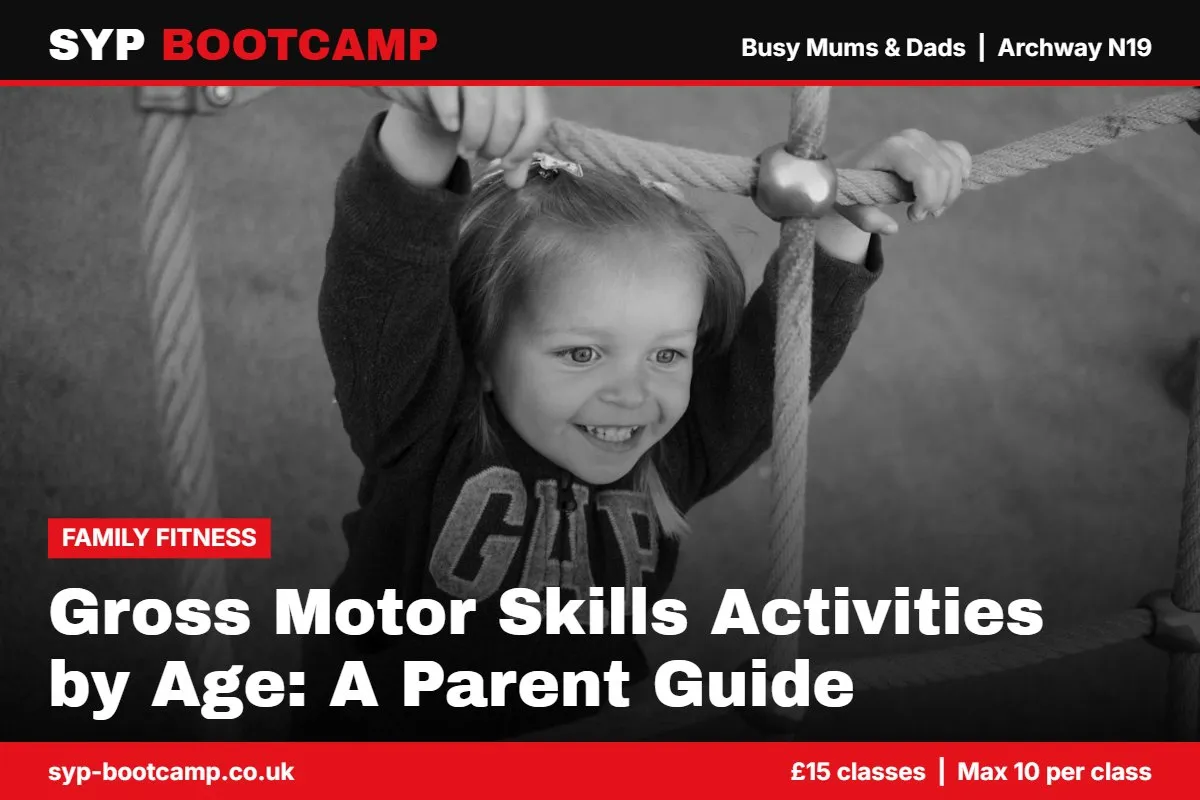
Gross Motor Skills Activities by Age: A Parent Guide
You might have heard the phrase at nursery pickup or in a school report: “working on gross motor skills”. It sounds technical, but it simply means the big movements children make with their whole body: running, jumping, climbing, throwing, balancing. The good news for busy parents is that you do not need special equipment or classes. Everyday play builds these skills, and with a little thought you can give it a boost. Here are simple gross motor skills activities by age, explained in plain English, focused on fun movement rather than therapy.
What are gross motor skills?
Motor skills are how we control our bodies. They are usually split into two groups:
- Gross motor skills use the big muscles of the arms, legs and trunk. Think walking, running, hopping, kicking, climbing stairs and riding a bike.
- Fine motor skills use small muscles in the hands and fingers. Think holding a pencil, doing up buttons or using scissors.
Strong gross motor skills help children keep up in the playground, feel confident in PE, sit well at a desk (yes, core strength matters for that) and stay active as they grow. And children who feel good at moving tend to move more.
How much movement do young children need?
The NHS physical activity guidelines for under-5s say children aged 1 to 4 should be active for at least 180 minutes a day, spread throughout the day, including active and outdoor play. For older children, the guidelines for children and young people suggest an average of at least 60 minutes of moderate or vigorous activity a day. My post on how much exercise children need explains what that looks like in real life.
Gross motor skills activities by age
Ages 1 to 2: exploring and moving
- Cushion mountain: pile up cushions and let them crawl and climb over them.
- Push-along walks: a toy pram, a box or a small chair to push across the room.
- Ball roll: roll a big ball for them to chase, crawl after and push back.
- Stairs with help: climbing up and down, holding your hand, is brilliant practice.
- Dancing: bouncing to music builds leg strength and rhythm.
Ages 3 to 4: running, jumping, climbing
- Jump the river: two skipping ropes on the floor as a “river”. Jump over, then make it wider.
- Animal moves: bunny hops, frog jumps, bear crawls and crab walks.
- Kick the ball: a big soft ball, kicked towards a “goal” between two shoes.
- Playground climbing: low climbing frames, slides and steps.
- Follow the leader: marching, tiptoes, big steps, little steps.
For more outdoor ideas at this age, try my outdoor play ideas for toddlers.
Ages 5 to 7: skills and control
- Hopscotch: hopping on one leg, landing on two, changing direction.
- Skipping: start with skipping steps (no rope), then try a rope.
- Obstacle course: over the sofa cushions, under the table, along a tape line, five jumps.
- Catch and throw: beanbags first, then a soft ball.
- Scooter and balance bike: great for balance and leg strength.
Ages 8 to 10: putting it all together
- Cycling without stabilisers, on quiet paths.
- Rounders, cricket or football in the park.
- Climbing at a climbing wall or on larger playground frames.
- Swimming, which builds whole-body strength and coordination.
- Cartwheels, handstands against a wall and forward rolls on soft ground.
A simple weekly plan for busy families
You do not need to schedule an hour a day. Spread it across normal life:
| Day | Idea (10 to 30 minutes) |
|---|---|
| Monday | Walk or scoot to school, hop over the cracks |
| Tuesday | Living room obstacle course before dinner |
| Wednesday | Playground after school |
| Thursday | Dance party to three songs |
| Friday | Catch and throw in the garden or park |
| Weekend | Longer outing: woods, swimming or a bike ride |
Local playgrounds are your best free resource. My guide to playgrounds near Archway and Highgate lists ones worth the walk.
Tips to make it work
- Let them struggle a little. Do not lift them to the top of the climbing frame. Working it out is the skill.
- Barefoot play indoors on safe surfaces helps them feel the ground.
- Repeat favourites. Kids learn by doing the same thing many times.
- Keep it playful. If it feels like a lesson, they switch off.
- Join in. Kids copy what they see, and you will get a workout too.
When to ask for advice
Children develop at different speeds, and a few months either way is usually normal. But if your child seems much less steady than others their age, loses skills they had, has pain, or you have any worries, talk to your health visitor or GP. They can check development and refer to a physiotherapist or occupational therapist if needed. This post is about everyday play, not a replacement for that support.
Your own gross motor skills
Here is the twist. Adults need these big movement skills too: getting up off the floor without hands, carrying shopping up stairs, lifting a child into a car seat. They fade if you never practise them. My SYP Built To Last functional strength class trains exactly these real-life movements for parents over 35.
FAQs
What are examples of gross motor skills?
Walking, running, jumping, hopping, skipping, climbing, kicking, throwing, catching, balancing and riding a bike are all gross motor skills.
What is the difference between gross and fine motor skills?
Gross motor skills use big muscles for whole-body movement. Fine motor skills use small muscles in the hands and fingers for tasks like drawing, writing and buttons.
How can I improve my child’s gross motor skills at home?
Short bursts of active play every day: obstacle courses, dancing, animal walks, jumping games and catch. Add regular outdoor play at the park or playground.
Should I worry if my child is clumsy?
Many children go through clumsy phases, especially during growth spurts. If it affects daily life or you are worried, speak to your GP or health visitor.
Book your first class
Keep up with the kids and feel strong doing it. SYP Bootcamp runs 45-minute small-group classes in Archway N19, max 10 people, £15 a class, for all fitness levels. Book your £15 class here or call or WhatsApp me on 07301 512215. If you would like coaching built entirely around you, have a look at my private personal training in Archway.
About the author
Artem Olekhnovych is a personal trainer in Archway and the founder of SYP Fitness and SYP Bootcamp. He has coached clients in Archway, Highgate and across North London for over 10 years, and runs small-group bootcamp classes for busy mums and dads. Read reviews from his 1-1 clients.
