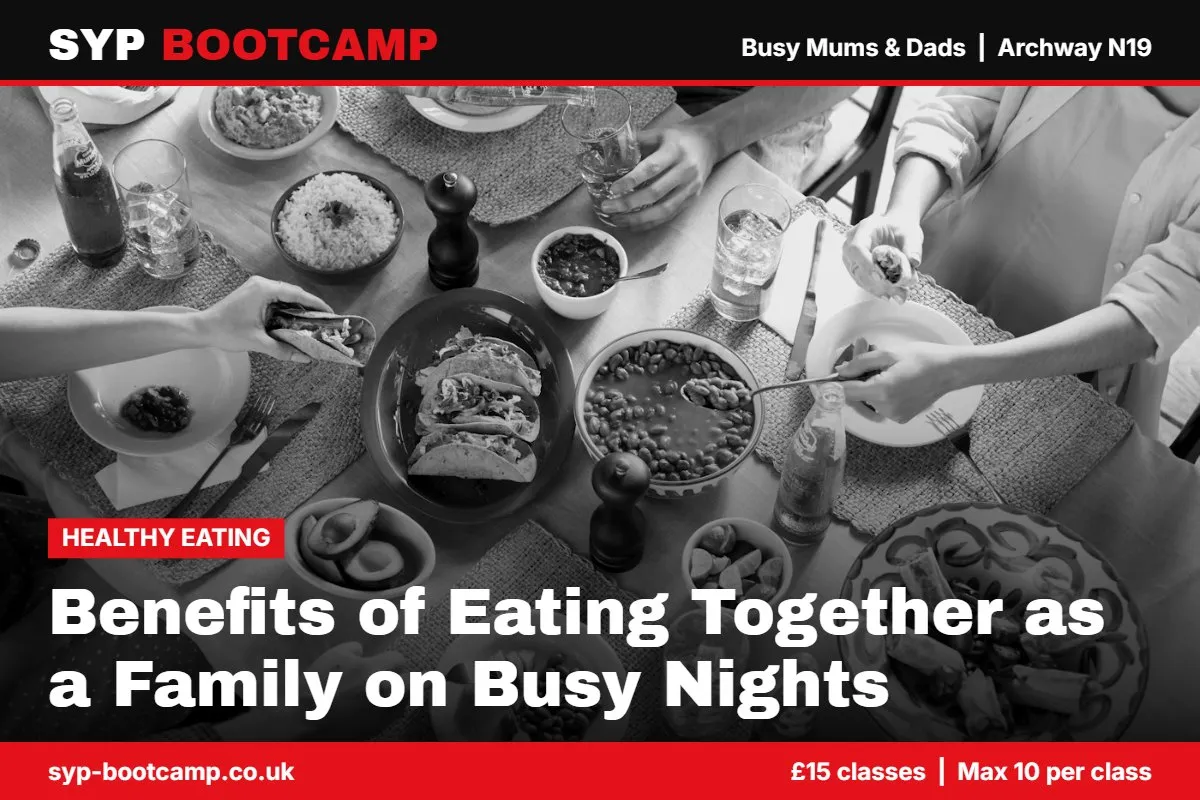
Benefits of Eating Together as a Family on Busy Nights
In a lot of homes I know, dinner happens in shifts. The kids eat at 5pm in front of the telly, one parent grabs something standing at the counter at 7, and the other eats whatever is left at 9 after getting in from work. Nobody planned it that way. It just happened. If that sounds like your house, this post is for you. The benefits of eating together as a family are real, but they do not need a perfect sit-down dinner every night. Even a few shared meals a week can make a difference, and I will show you how to make them happen on busy weeknights.
The benefits of eating together as a family
Researchers have studied family meals for years, and while a shared dinner is not a magic fix, many studies link regular family meals with healthier eating habits in children. More importantly, parents tend to notice the everyday benefits themselves:
- Better food choices. When everyone eats the same meal, children see adults eating vegetables and trying new things. Copying is one of the most powerful ways kids learn.
- Less picky eating over time. A relaxed table where new food is offered without pressure helps children get used to different tastes.
- Slower, calmer eating. Sitting down, rather than eating on the go, helps everyone notice when they are full.
- Conversation and connection. For many families, dinner is the only time in the day when everybody is in one place with no screens.
- A steady rhythm. Regular meal times help children (and adults) avoid the 4pm crash and the evening grazing that follows.
- Less cooking. One meal for everyone instead of three different ones is easier on you.
That last point matters a lot to tired parents. If you have been eating the kids’ leftovers and then a second dinner later, my post on how to stop eating your kids’ leftovers explains why one shared meal is often the simplest fix.
Why it is so hard on weeknights
Let us be honest about the obstacles. Late commutes on the Northern line. After-school clubs. Shift work. A baby who needs feeding at a different time. Teenagers who want to eat in their rooms. These are real, and guilt does not help with any of them.
So forget the idea that a family meal has to be dinner, at the table, with everyone, every night. Instead, aim for “more often than now”. If you currently share one meal a week, two is a win.
A 7-step plan to eat together more often
- Pick your realistic number. Look at the week and choose two or three meals that can work. Breakfast and weekend lunches count too.
- Put them in the calendar. Treat them like any other appointment. If Wednesday is a family dinner, football practice goes on another night where possible.
- Move the time, not the meal. If the kids cannot wait until 7.30pm, give them a filling snack at 4pm and eat together a little later, or bring dinner forward and have a lighter snack later yourself.
- Keep the food simple. A family meal can be beans on toast with salad. Have three or four “fast and easy” dinners you can cook in 20 minutes. My list of quick family dinners is a good place to start.
- Prep ahead. A Sunday batch of chilli, curry or pasta sauce means a shared meal on a Tuesday is just reheat and serve. See my guide to meal prep for busy families.
- Give everyone a job. Kids lay the table, pour the water or toss the salad. When children help, they are more invested in sitting down. My post on cooking with kids has age-by-age jobs.
- Phones in another room. Including yours. The TV goes off. This is the part that turns “eating in the same room” into a family meal.
How to make the table a nice place to be
The benefits come from the atmosphere as much as the food. If every meal turns into a battle about vegetables, nobody will want to come back. A few ideas that help:
- Serve family style. Put dishes in the middle and let children serve themselves (with help). They are more likely to try something they chose.
- No pressure rule. Offer every food, but do not force bites or bribe with pudding.
- Conversation starters. Try “best and worst bit of your day”, “what made you laugh today” or “if you could eat dinner anywhere in the world, where would it be?”
- Keep it short for little ones. Toddlers can only sit still for so long. Let them leave the table politely when they are done.
- Stay calm about mess. Spilt water is part of the deal.
Other ways to share food when dinner is impossible
If your schedule genuinely rules out shared evening meals, try:
- Breakfast together two or three mornings a week, even if it is only 15 minutes of porridge before school.
- A weekend brunch ritual, like pancakes every Saturday.
- Sit with them while they eat, with a cup of tea, even if you eat later. The chat still counts.
- A picnic tea in Waterlow Park or on the Heath in the summer months.
- Video calls if a parent works away, so they can still be “at the table”.
Where a bootcamp class fits in
Here is something people do not talk about much: family meals are harder when you are running on empty. If you get home stressed, shouting at everyone to sit down is the last thing that helps. Regular exercise is one of the best tools I know for a calmer evening. If work and family stress are piling up, my SYP Release stress relief class, with pads and slam balls, is a great way to leave the day behind before you walk through your front door.
FAQs
How many times a week should a family eat together?
There is no magic number. Start with what is realistic, even one or two shared meals a week, and build from there. Consistency matters more than perfection.
Does breakfast count as a family meal?
Yes. Any meal where you sit together, eat the same food and talk without screens counts. For many families, breakfast or weekend lunch is easier than dinner.
What if my teenager refuses to join family meals?
Give them a say. Let them choose or cook a meal once a week, keep the conversation light rather than an interrogation, and keep phones away for everyone, not just them.
Is it okay to eat in front of the TV sometimes?
Of course. A Friday film night with dinner on the sofa can be a lovely family tradition. The aim is to have some meals a week where you are focused on each other.
Book your first class
A calmer, stronger you makes every family meal easier. SYP Bootcamp runs 45-minute small-group classes in a church hall in Archway N19, with a maximum of 10 people, all fitness levels and an easier and harder option for every exercise. It costs £15 a class. Book your £15 class here or call or WhatsApp me on 07301 512215. If your schedule is too unpredictable for a group class, private personal training in Archway can be fitted around your week.
About the author
Artem Olekhnovych is a personal trainer in Archway and the founder of SYP Fitness and SYP Bootcamp. He has coached clients in Archway, Highgate and across North London for over 10 years, and runs small-group bootcamp classes for busy mums and dads. Read reviews from his 1-1 clients.
