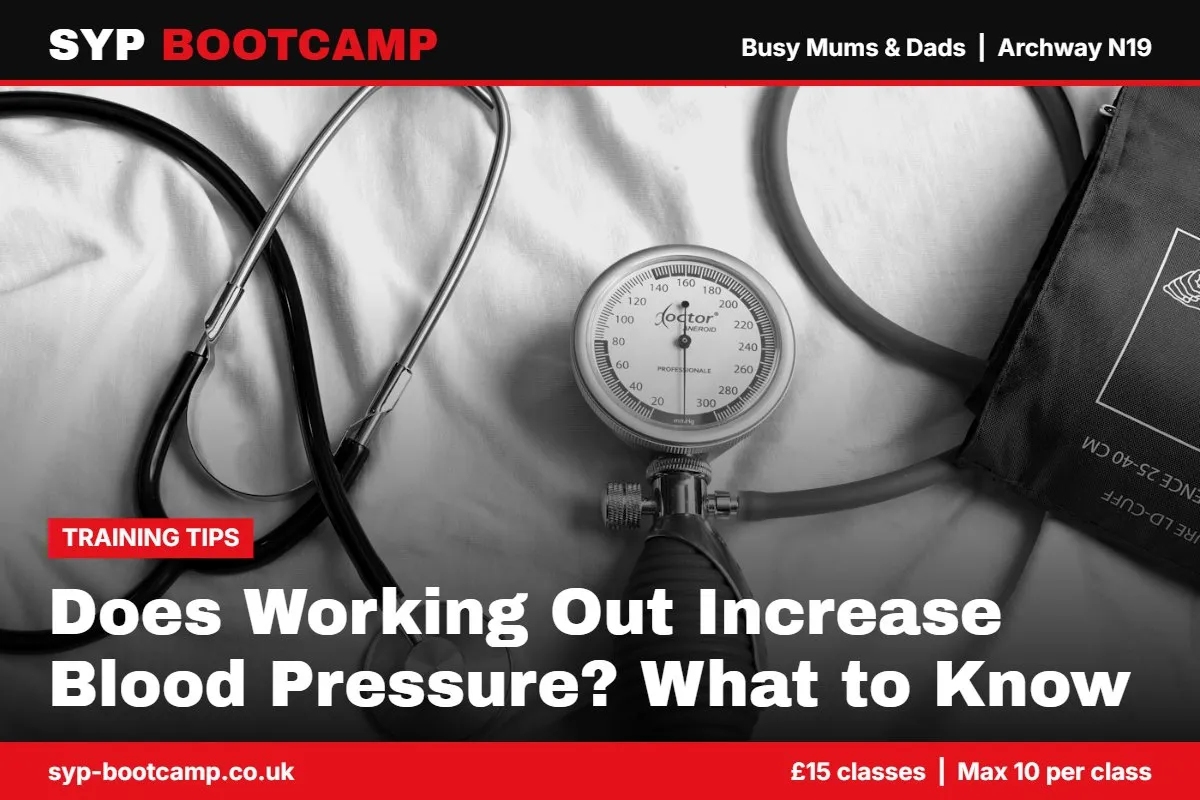
Does Working Out Increase Blood Pressure? What to Know
Maybe your GP mentioned your blood pressure was “a bit high” at your last check. Maybe you bought a home monitor, tested it straight after carrying the shopping up three flights of stairs and got a fright. Either way, a common worry I hear from parents in their 40s and 50s is this: does working out increase blood pressure, and is it safe for me to exercise? The short answer is that exercise raises it for a short time while you move, and over weeks and months regular exercise is one of the best things you can do to bring it down. Here is how that works and how to train safely.
Important: if you have been diagnosed with high blood pressure, a heart condition, or you take blood pressure medication, speak to your GP or practice nurse before starting a new exercise plan. This article is general information, not medical advice.
Does working out increase blood pressure?
Yes, during the workout itself. When you exercise, your muscles need more oxygen, so your heart beats faster and pumps harder. The top number of your blood pressure (systolic) rises while you are moving. That is a normal, healthy response.
Once you stop, it comes back down. For many people it even dips a little below their usual level for a few hours afterwards. That is why you should not check your blood pressure straight after a workout, a sprint for the bus or a stressful bedtime. Wait until you have been sitting quietly for at least five minutes.
The long-term effect: exercise helps lower it
Over time, the picture is very different. The NHS page on preventing high blood pressure lists exercising regularly, aiming for at least 150 minutes a week, as one of the main things you can do, alongside a balanced diet and keeping to a healthy weight.
The British Heart Foundation reported on a large review of 270 trials that found all the main types of exercise lowered resting blood pressure, including aerobic exercise, strength training and combined training. You can read their summary on the BHF website.
So the short-term rise is not something to fear. It is part of the process that makes your heart and blood vessels work better.
When to be careful
Blood Pressure UK has a clear guide on exercise and your blood pressure. In summary, it says:
- If your blood pressure is between 140/90 and 179/99, it is high but generally safe to be more active.
- If it is 180/100 or above, speak to your doctor or nurse before starting new exercise.
- If it is 200/110 or higher, do not start any new activity and see your doctor or nurse as soon as possible.
- If it is very low (below 90/60), speak to your doctor or nurse before starting new exercise too.
Blood Pressure UK also suggests avoiding activities that cause very sharp, sudden spikes, such as heavy weightlifting, sprinting and squash, if your blood pressure is high.
Stop and get help if you notice
- Chest pain or tightness
- Severe breathlessness that does not settle with rest
- Dizziness, fainting or a pounding headache
- A racing or irregular heartbeat
For chest pain, call 999. For anything else unusual, stop and speak to your GP or NHS 111 before you train again.
How to work out safely with high blood pressure
Here is how I set up training for clients who have mild to moderate high blood pressure and the all clear from their GP:
- Warm up for longer. 8-10 minutes of easy movement lets your heart rate and blood pressure rise gradually. My post on how to warm up before exercise has a simple routine.
- Use the talk test. At a moderate level you breathe harder but can still talk in sentences without panting between words.
- Keep breathing. Never hold your breath while lifting. Breathe out as you push or stand up, in as you lower.
- Go moderate on weights. Pick a weight you can lift for 12-15 smooth reps, and stop with a few reps left. Leave maximum lifts alone.
- Avoid long holds upside down. Some yoga poses and moves where your head goes well below your heart may not suit everyone. Ask your GP if unsure.
- Cool down. Walk slowly for a few minutes rather than stopping dead.
- Take your medication as prescribed and tell any coach what you take, as some tablets affect heart rate.
A simple starter week
Blood Pressure UK notes you can break activity into shorter sessions of 10 or 15 minutes and build up over a few weeks. A sensible first week could be:
- Monday: 20-minute brisk walk
- Tuesday: 25 minutes of light strength: sit-to-stand from a chair, wall push-ups, band rows, glute bridges. 2 sets of 12.
- Wednesday: 2 x 10-minute walks, for example the school run there and back
- Thursday: rest or gentle stretching
- Friday: repeat Tuesday
- Weekend: a longer family walk or bike ride
Add 5 minutes to the walks each week until you reach about 150 minutes a week. For more ideas on the best types of activity, see my post on the best exercise for high blood pressure, and for background, read exercise and blood pressure.
Where a bootcamp class fits
Done sensibly, a group class can be a great fit. In my classes I do a full warm-up, keep effort moderate for anyone who needs it, and every exercise has an easier option. Please tell me about your blood pressure and any medication before your first session, so I can guide you. Classes are small, so I can actually keep an eye on you. If your main driver is stress, which can play a part in how you feel day to day, my SYP Release stress relief class is a good place to start, with the intensity kept under control.
FAQs
Is it normal for blood pressure to go up during exercise?
Yes. The top number rises while you move because your heart pumps harder. It should come back down within a short time after you stop.
Should I check my blood pressure after a workout?
Not straight away. Wait until you have rested and are sitting calmly, ideally at the same time each day, so readings are comparable.
Can lifting weights raise blood pressure?
Heavy lifting, especially when holding your breath, causes a sharp temporary spike. Moderate weights with steady breathing are generally fine once your GP is happy, and strength training can help lower resting blood pressure over time.
How long does it take for exercise to lower blood pressure?
It varies from person to person. Regular exercise over several weeks and months, together with diet and other lifestyle changes, gives the best results. Keep your GP updated with your readings.
Book your first class
If your GP is happy for you to exercise and you would like supervised, sensible training, come and try a session. SYP Bootcamp runs 45-minute small-group classes indoors in Archway N19, max 10 people, £15 a class, with easier and harder options for every exercise. Book your £15 class here or call or WhatsApp me on 07301 512215 to talk it through first. If you have a health condition and want 1-1 support, see my injury-safe personal training in Archway.
About the author
Artem Olekhnovych is a personal trainer in Archway and the founder of SYP Fitness and SYP Bootcamp. He has coached clients in Archway, Highgate and across North London for over 10 years, and runs small-group bootcamp classes for busy mums and dads. Read reviews from his 1-1 clients.
