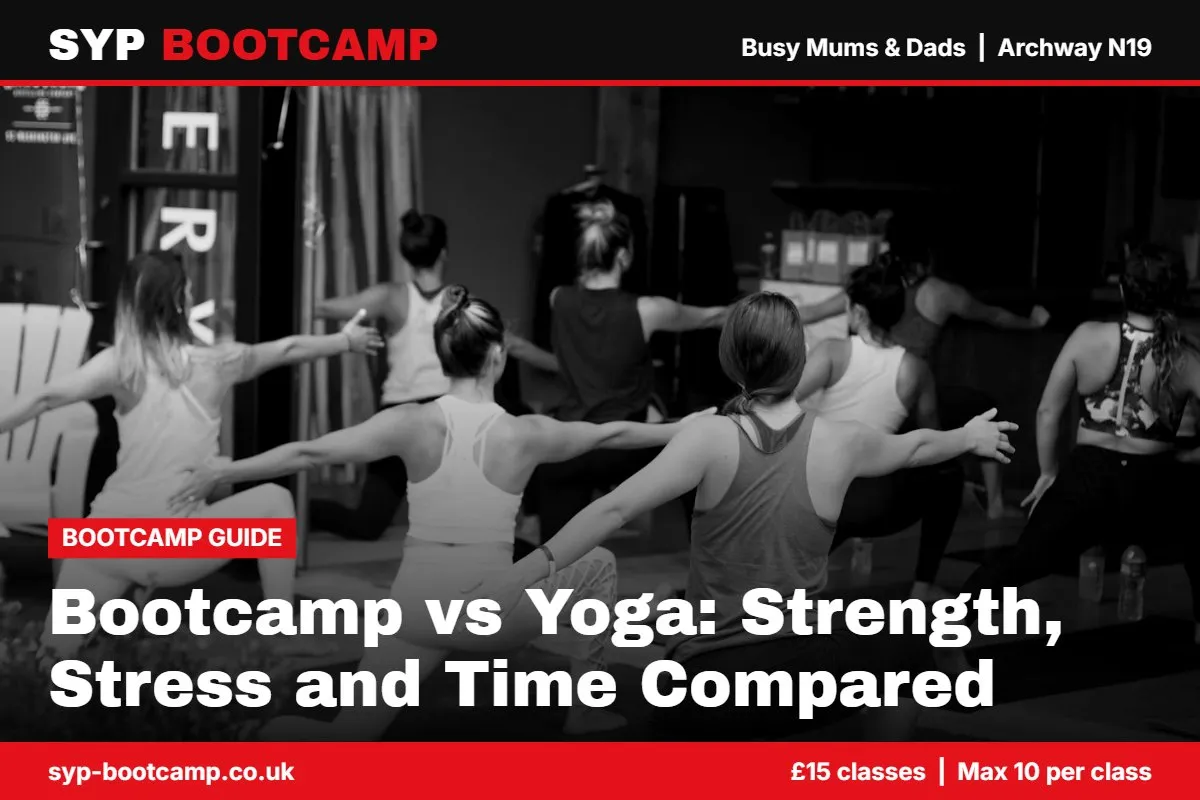
Bootcamp vs Yoga: Strength, Stress and Time Compared
It is 8pm, the kids are finally down, and you are scrolling class timetables wondering whether you need something to calm you down or something to wake you up. Yoga promises peace and flexibility. A bootcamp promises strength and fitness. When you only have time for one or two sessions a week, the bootcamp vs yoga question really matters. Here is how I explain the difference to parents who ask me, based on four things busy mums and dads care about most: strength, flexibility, stress and time.
Strength: bootcamp wins, but yoga is not nothing
Parenting is physical. You lift a toddler out of a cot dozens of times a day, haul a buggy up the stairs at Archway station, and carry bags of shopping up the hill. Building strength makes all of that easier and less likely to leave you sore.
A bootcamp is built around strength. In my classes you will squat, hinge, push, pull and carry, often with kettlebells or dumbbells, and you will gradually lift more as you get stronger. That progression is the key to getting stronger over time.
Yoga builds strength too, mainly through holding your own bodyweight in poses like plank, chair or warrior. It is good for endurance in the shoulders, legs and core. What it cannot easily do is add load as you improve, so strength gains tend to level off. The NHS lists both yoga and lifting weights as muscle-strengthening activities in its strength exercises guidance, so both count, but they are not equal.
Flexibility: yoga wins clearly
If you cannot touch your toes, your hips feel like concrete after a day at the laptop, or your shoulders are up by your ears, yoga is brilliant. It spends a whole session moving joints through their full range and holding stretches long enough for them to work.
A bootcamp does include mobility in the warm-up and cool-down, and a full-range squat or lunge does keep you supple. But if flexibility is your main goal, a bootcamp alone will not do as much as a regular yoga practice. My 10-minute mobility routine is a good middle ground you can do at home.
Stress: both help, in different ways
This is where the bootcamp vs yoga choice becomes personal. Yoga calms you down. Slow breathing and stillness switch you out of “everything is urgent” mode. For anxious, overloaded parents, that can be exactly what is needed.
A bootcamp works more like a release valve. You hit pads, swing a kettlebell, push hard for 40 seconds, then breathe. Many of my clients say they walk in wound up and walk out feeling lighter. That is the whole idea behind my SYP Release stress relief class, with pads and slam balls.
The NHS tips to reduce stress include being physically active, and both options qualify. Ask yourself: when you are stressed, do you need quiet, or do you need to get it out? Your answer is a pretty good guide. I go into more detail in my post on exercise for stress relief for parents.
Bootcamp vs yoga: what you get per hour
If you can only train twice a week, efficiency matters. A 45-minute bootcamp covers strength, cardio and some mobility in one go. A yoga class covers flexibility, some strength and relaxation, but not much cardio.
Here is how I would rate them for a parent with limited hours:
- Getting fitter (stamina): bootcamp
- Getting stronger: bootcamp
- Moving more freely: yoga
- Calming the mind: yoga
- Burning off frustration: bootcamp
- Gentle restart after a long break: either, as long as the class is beginner friendly
A two-session week that uses both
If you like the sound of both, here is a simple plan that fits around school and work:
- Session 1, early in the week: a bootcamp class. Strength and cardio while you have more energy.
- Session 2, end of the week: a yoga class, or 20 minutes of yoga at home on a Friday or Sunday evening to wind down.
- Every day you can: 10 minutes of walking, ideally outside. It adds up fast.
If you only have one slot, I would usually start with whichever you are more likely to stick with. Consistency beats the “perfect” plan every time.
Who should be careful
Some yoga poses and some bootcamp moves are not right for everyone. If you are pregnant, postnatal, have high blood pressure, back problems or joint pain, please check with your GP or physio before starting either. For example, people with high blood pressure are usually advised to avoid very intense straining, and the NHS page on high blood pressure explains why getting checked matters. Tell the instructor about anything relevant before class so they can adjust things for you.
Also comparing quieter options? Read my guide to bootcamp vs pilates.
FAQs
Is yoga enough exercise on its own?
For flexibility and relaxation, yes. For heart health and fitness, most people also need some activity that gets them breathing harder, like brisk walking, cycling or a bootcamp.
Will a bootcamp make me less flexible?
No. Training through a full range of movement usually keeps or improves flexibility. Tightness tends to come from sitting all day, not from strength work.
Which is better for back pain, yoga or bootcamp?
It depends on the cause. Gentle movement helps most back pain, and both can be adapted. Check with a GP or physio first if pain is severe or new, and tell your instructor about it.
Can I do yoga the day after a bootcamp?
Yes. A gentle yoga session is a great way to loosen up the day after a harder class.
Book your first class
The easiest way to know if a bootcamp suits you is to try one. SYP Bootcamp runs 45-minute small-group classes indoors in a church hall in Archway N19, max 10 people, £15 a class, with easier and harder options for every move. Book your £15 class here or call or WhatsApp me on 07301 512215. If you would prefer a plan built just for you, have a look at private personal training in Archway.
About the author
Artem Olekhnovych is a personal trainer in Archway and the founder of SYP Fitness and SYP Bootcamp. He has coached clients in Archway, Highgate and across North London for over 10 years, and runs small-group bootcamp classes for busy mums and dads. Read reviews from his 1-1 clients.
