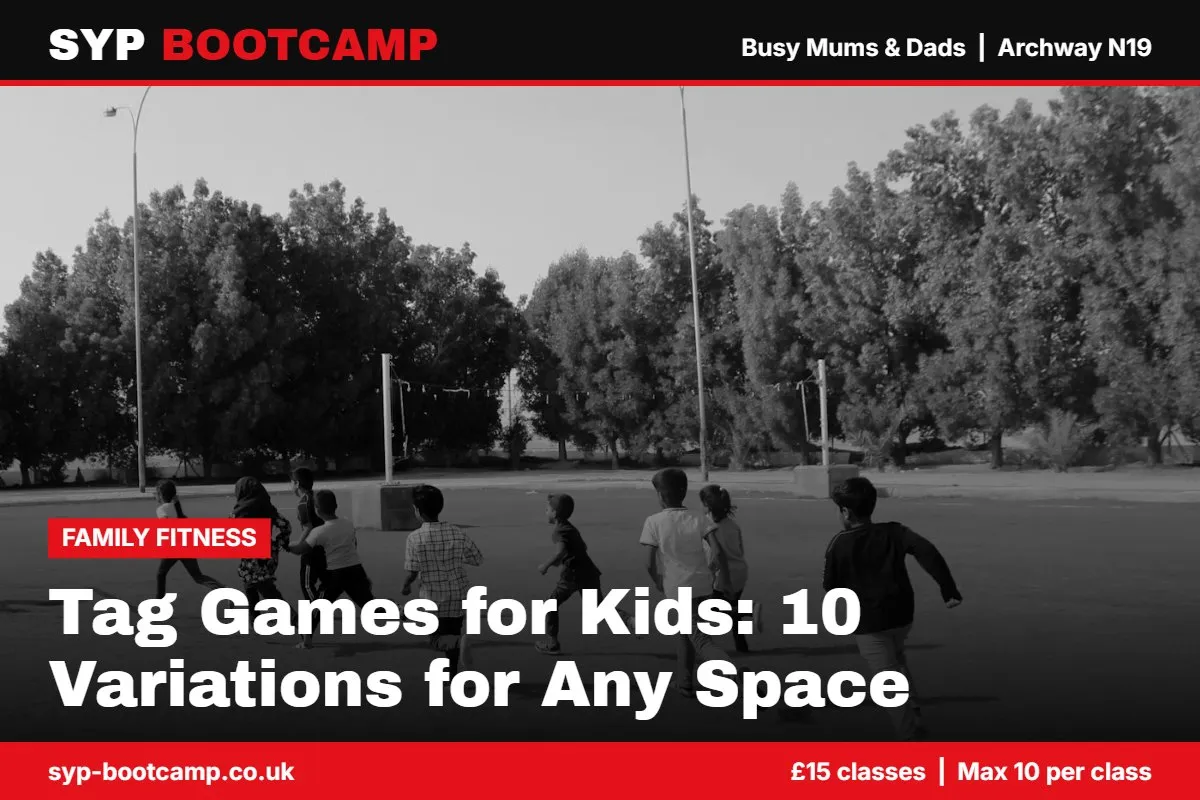
Tag Games for Kids: 10 Variations for Any Space
If you ever need to tire out a group of children fast, tag is the answer. One person is “it”, everyone else runs, and within ten minutes even the most hyper kids are red-faced and happy. The trouble is that plain tag gets old, the fastest kid always wins, and it does not work in a small living room. So here are ten tag games for kids I have used with families, at parties and in parks around Archway, with rules for mixed ages and tight spaces.
Before you start: three ground rules
- Gentle tags only. A touch on the arm, shoulder or back. No pushing, no grabbing clothes, no tagging heads.
- Set the boundary. Trees, cones, jumpers on the ground, the edge of the rug. Anyone out of bounds becomes “it”.
- Agree a “time out” word. If someone is hurt or needs the loo, everyone freezes.
10 tag games for kids
1. Base tag (best for little ones)
Classic tag with one or two “safe bases”, such as a tree or a mat, where players cannot be caught. Limit time on base to a count of five. This gives younger or slower children a breather and stops them getting caught every time.
2. Shadow tag
On a sunny day, “it” catches people by stepping on their shadow. Players have to think about where the sun is, which adds a clever twist. Best in the morning or late afternoon, when shadows are long.
3. Blob tag
When “it” tags someone, they join hands and become a blob. The blob keeps growing, and only the people on each end can tag. Once the blob has four people, it can split into two blobs of two. Last person caught wins. Great for big groups and parties.
4. Hospital tag
Every time you are tagged, you must hold that spot with one hand, like a bandage. Tagged a second time? Hold that spot with your other hand. Tagged a third time and you are out, or you become a catcher. This one causes a lot of giggling as kids hobble around holding their knee and elbow.
5. Everybody’s it
Everyone is a catcher and everyone is a runner. If you are tagged, you crouch down. You can get back up when the person who tagged you is tagged. It is chaos, in a good way, and nobody is left out.
6. Partner tag
Players are in pairs, holding hands, and “it” is a pair too. This slows everything down, so it works well indoors and with toddlers, as long as you pair a big kid with a little one. It also teaches teamwork, because you cannot run off without your partner.
7. Tail tag
Everyone tucks a sock, scarf or strip of material into the back of their waistband. Instead of tagging, catchers pull tails. Once your tail is gone, you are a catcher too. It removes all the “I didn’t feel it!” arguments.
8. Crab tag (small spaces)
All players move in a crab walk: hands and feet on the floor, tummy facing the ceiling. “It” is also a crab. Brilliant in a living room on a rainy day, and a serious arm and shoulder workout. Swap to bear crawl for a change.
9. Ball tag
“It” holds a soft ball or rolled-up socks and tags by gently rolling or tossing it at a runner’s legs (below the knees only). Children love the throwing element, and it lets a slower child catch a faster one.
10. Torch tag (autumn and winter)
On dark evenings in a garden, “it” holds a torch and “tags” people by shining the light on them. Everyone else hides and creeps. Keep it slow and walk only, and clear trip hazards first. Perfect for sleepovers and bonfire night gatherings at home.
Rules for mixed ages
Tag gets unfair quickly when an 11 year old is chasing a 4 year old. A few rules keep it fun:
- Bigger kids walk, little kids run. Or bigger kids hop.
- Two catchers for small kids. If the youngest is “it”, give them a helper.
- Time limits. If no one is caught in 60 seconds, switch “it”.
- Grown-ups play on knees. Seriously, try it. It levels the field and is a good workout for you.
Small spaces and flats
Not everyone has a garden. Best picks for indoor or tight spaces are partner tag, crab tag and hospital tag played at walking pace. Move coffee tables to the side, keep hard floors clear of socks and toys, and agree that sofas are out of bounds. For more indoor ideas, read my guide to indoor games to keep kids active.
Parties, parks and playdates
- Birthday parties: blob tag and tail tag work with up to 20 kids. Use the tails as party bag items.
- Park playdates: base tag and shadow tag. A big open bit of grass is ideal. I have more ideas in active games for kids in the park.
- Halloween and bonfire night: torch tag and zombie tag. My post on halloween active games for kids has the zombie rules.
Why tag is great exercise
Tag is short bursts of sprinting, stopping, dodging and changing direction, with recovery in between. That is basically interval training. The NHS physical activity guidelines for children and young people recommend an average of at least 60 minutes a day of moderate or vigorous activity, and a good session of tag counts as vigorous.
It is good for parents too. If you have tried to keep up with your kids and found yourself puffing after two rounds, you are not unfit forever. You just need a bit of regular training. That is what my bootcamp classes are for: short, varied work that builds the fitness to say yes when your kids ask you to play.
FAQs
What is the best tag game for young children?
Base tag and partner tag work best for 3 to 6 year olds, because they can rest on base or be helped by an older partner. Keep rounds short.
How do you play tag in a small space?
Change how people move: walking, crab walking or bear crawling. This slows the game down and stops collisions with furniture.
How do you stop arguments in tag?
Use tail tag, so it is obvious who has been caught, and agree the rules before you start. A parent referee helps with younger children.
How many kids do you need for tag?
Three is enough for base or shadow tag. Blob tag and everybody’s it are best with eight or more.
Book your first class
Want to win the next family game of tag? SYP Bootcamp runs 45-minute small-group classes in an indoor church hall in Archway N19, maximum 10 people, at £15 a class, and every exercise has an easier and harder option. Book my £15 class, or call or WhatsApp me on 07301 512215. If you want a bigger change with a structured plan, read about my 12-week transformation in Archway.
About the author
Artem Olekhnovych is a personal trainer in Archway and the founder of SYP Fitness and SYP Bootcamp. He has coached clients in Archway, Highgate and across North London for over 10 years, and runs small-group bootcamp classes for busy mums and dads. Read reviews from his 1-1 clients.
