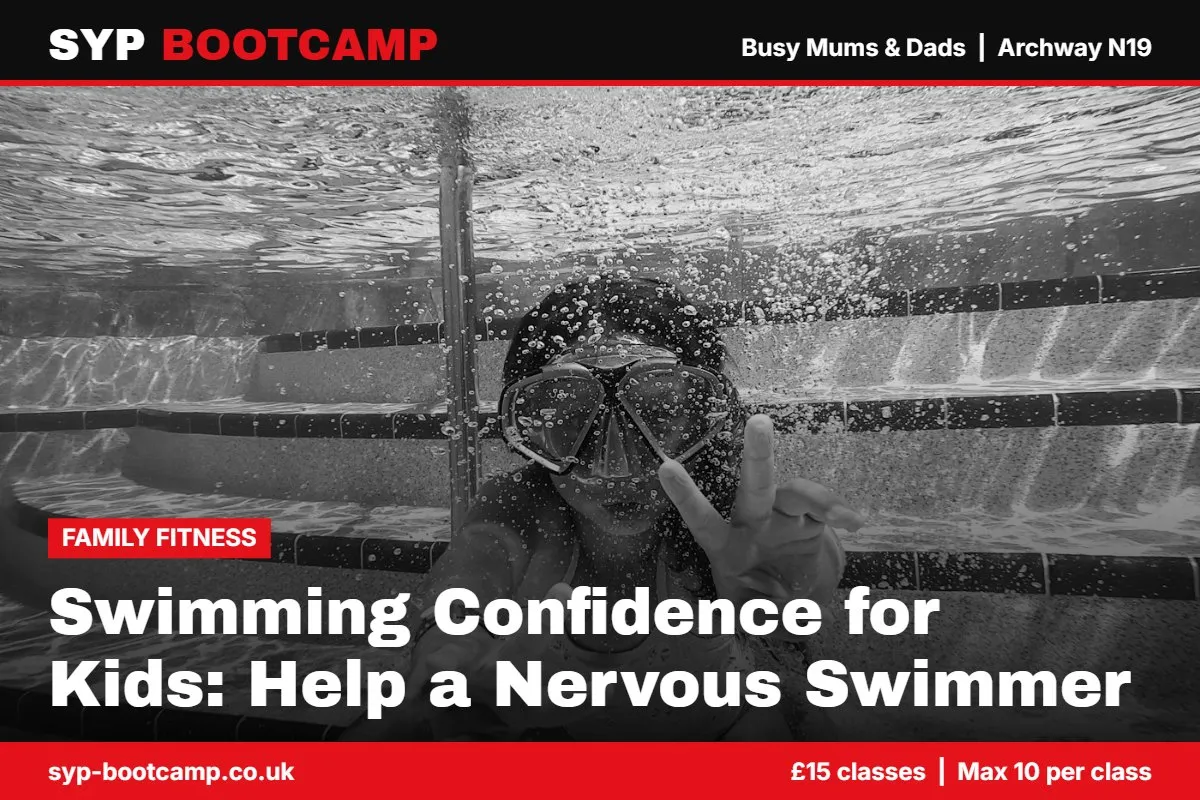
Swimming Confidence for Kids: Help a Nervous Swimmer
Some kids leap into the pool the second they see water. Others cling to your neck, cry at the changing room door, or refuse to get their face wet. If your child is in the second group, you are not alone, and it is not a sign they will never swim. Swimming confidence for kids is built in small steps, mostly before and between lessons, and parents can make a huge difference without being swimmers themselves.
I coach busy parents in Archway, and I have watched many of them sit poolside every week while a nervous child stands frozen on the step. Here is what I have learned from them, and from years of helping nervous adults try new things: fear shrinks when the steps are small enough.
Why some kids are scared of water
Knowing the reason helps you pick the right fix:
- Water in the face or ears feels strange and makes them panic.
- Not touching the bottom takes away their sense of control.
- Noise and busyness: echoing halls, splashing and whistles can overwhelm sensitive kids.
- A bad experience, like slipping under or being splashed hard.
- Picking up our fear. If a parent is nervous around water, children notice.
Build swimming confidence at home first
The bath is the perfect training pool: warm, quiet, shallow and familiar. Try one or two of these each bath time for a couple of weeks:
- Blow bubbles. Lips on the water, blow out through the mouth. Then the nose. Then mouth and nose together. Blowing out stops water going up the nose, which is the number one fear.
- Pour water on the head. Start at the back of the head, then over the top. Let them hold the cup and do it themselves, so they are in control.
- Face in for 3. Count to 3, quick face dip, big smile. Build to 5, then 10.
- Lie back. Support their head with your hand while they lie back and let ears go under. Talk calmly about what they can hear.
- Kick splash. Sitting at the end of the bath, they kick their legs to make big splashes. Fun and great practice.
Goggles are fine to use at home and in the pool. For many kids, being able to see clearly underwater removes a lot of the fear.
At the pool: a step-by-step plan
Go for family swims between lessons, not just lessons. Aim for short, relaxed visits where the only goal is fun. A pool with a shallow, sloping beach entry is ideal, because your child can walk in at their own pace. Archway Leisure Centre’s leisure pool has a sloping beach entry, which is perfect for nervous children.
Visit 1: just get in
Sit on the edge or the beach and kick feet. Walk in holding hands. Splash, play with a toy, and leave while it is still fun. 20 minutes is plenty.
Visit 2: bubbles and bobbing
Hold hands facing each other, blow bubbles together, then bob down so chins, then mouths, then noses touch the water. Count out loud and cheer every try.
Visit 3: kicking and floating
Your child holds the edge and kicks. Then try floating on their back with your hand under their head and back. Keep your voice low and calm. Let them hold a float or a noodle.
Visit 4: little moments of independence
Let them push off from the wall to you, just one metre away. Then two metres. They should always reach you, so they learn they can trust the water and themselves.
Swimming confidence for kids: what helps and what hurts
Helps:
- Letting them set the pace, and stopping before they get upset.
- Praising effort (“You put your face in, that was brave!”) rather than results.
- Regular short visits, ideally weekly, between lessons.
- Going at quiet times so the pool feels less overwhelming.
Hurts:
- Dunking them or splashing them “to get them used to it”.
- Comparing them with siblings or friends.
- Forcing them to jump in before they are ready.
- Showing your own fear. If you are nervous, keep your voice calm, or ask a confident adult to go in with them.
Water safety comes first
Confidence is not the same as being safe. Always stay within arm’s reach of young children in the water, even with armbands or floats, and never leave them alone near water. Teach the simple rules early: walk, do not run, on the poolside, and only go in when an adult says so. If your child has a health condition, ask the pool staff and your child’s teacher what support is available, and tell them before every session.
Make lessons work harder
Lessons matter, and the practice you do between them makes each one count. Tell the teacher what your child finds hard, and ask what to practise that week. While your child is in the water, use those 30 minutes for yourself: my workout during kids’ swimming lessons shows you how. If you would like to get back in the water yourself, my post on swimming for single parents has practical tips that work for any busy parent. And swimming is one great piece of the bigger picture I cover in raising active kids.
FAQs
What age should kids start swimming lessons?
Many pools offer parent and baby sessions from a few months old, and group lessons often start from around 3 or 4. There is no wrong time to start. Older beginners often progress quickly because they understand instructions.
How do I get my child to put their face in the water?
Start in the bath with blowing bubbles, pouring water over the head, and short face dips with a count. Goggles can help a lot. Never force it, just keep it playful and frequent.
Are armbands a good idea?
They can help a nervous child enjoy the water, but they are not a safety device and children should never be left unsupervised in them. Some teachers prefer floats or noodles, as they let children move more naturally.
My child cries at every lesson. Should I stop?
It may be worth pausing lessons for a few weeks and doing relaxed family swims instead. Talk to the teacher too. Many children come back calmer once the water feels familiar again.
Book your first class
Helping your child feel brave is easier when you feel strong and calm yourself. SYP Bootcamp offers 45-minute small-group classes for parents in a church hall in Archway N19, with a maximum of 10 people and an easier or harder version of every exercise. It is £15 a class, and the timetable is sent when you book. Book my £15 class, or call or WhatsApp me on 07301 512215. If you live down the road and want one-to-one sessions, I am also a personal trainer for Tufnell Park.
About the author
Artem Olekhnovych is a personal trainer in Archway and the founder of SYP Fitness and SYP Bootcamp. He has coached clients in Archway, Highgate and across North London for over 10 years, and runs small-group bootcamp classes for busy mums and dads. Read reviews from his 1-1 clients.
