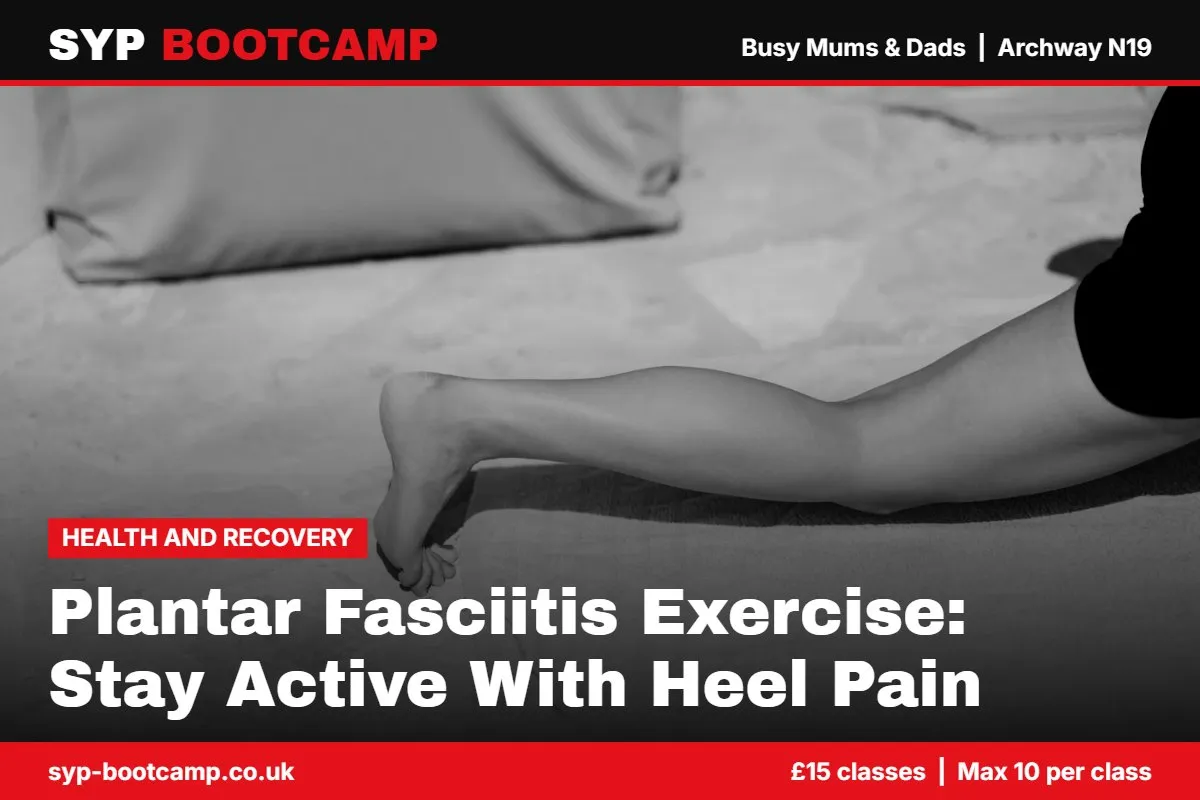
Plantar Fasciitis Exercise: Stay Active With Heel Pain
You swing your legs out of bed, put your feet on the floor, and the first few steps feel like you are walking on a bruise. It eases as you shuffle to the kettle, then comes back after a long day on your feet or a walk to the park. That pattern of heel pain is very typical of plantar fasciitis, and it is common in busy parents who spend hours standing, walking and carrying. In this post I cover what it is, how to keep active with lower-impact options, and a gentle plantar fasciitis exercise routine based on NHS self-care guidance.
Please treat this as general information. Heel pain has several possible causes, so if you are not sure what is going on, see your GP, a physiotherapist or a podiatrist.
What is plantar fasciitis?
The plantar fascia is a thick band of tissue that runs along the sole of your foot, from the heel to the toes. When it becomes irritated, you get pain on the bottom of the foot, usually around the heel and arch. The NHS page on plantar fasciitis describes the classic signs:
- pain that is worse when you take your first steps after sleeping or resting
- pain that eases as you move around, then gets worse after long periods of standing, walking or running
- pain when you stretch the sole, for example lifting your toes or climbing stairs
What the NHS suggests
The NHS self-help advice includes:
- resting and raising your foot when you can
- an ice pack wrapped in a towel for up to 20 minutes every 2 to 3 hours
- shoes with cushioned heels and good arch support, plus insoles or heel pads
- gentle stretches for the sole and heel
- low-impact exercise, such as swimming, rather than lots of walking or running
- asking a pharmacist about pain relief
It also advises avoiding long periods of standing or walking, high heels, tight pointed shoes, flip-flops, backless slippers and walking barefoot on hard surfaces. Padding around a hard kitchen floor in bare feet first thing is a common trigger in busy homes.
A gentle plantar fasciitis exercise routine
Do this once or twice a day. The first part is ideal before you get out of bed. Everything should feel like a gentle stretch, not sharp pain. If anything makes your heel worse, leave it out and ask a physio.
Before you get up (2 minutes)
- Ankle circles: 10 each direction, each foot, to warm things up.
- Towel or hand stretch: sit up in bed, loop a towel or dressing gown belt around the ball of your foot, and gently pull your toes towards you with your knee straight. Hold for 20 to 30 seconds, 3 times each foot.
During the day (5 minutes)
- Toe stretch: sitting, cross the sore foot over your other knee, hold your toes and gently pull them back towards your shin until you feel a stretch along the arch. Hold for 20 to 30 seconds, 3 times.
- Calf stretch against a wall: back leg straight, heel down. Hold for 30 seconds, 3 times each side. Then bend the back knee slightly and repeat to stretch the lower calf. Tight calves can increase the pull on the heel.
- Rolling: roll the sole of your foot over a cold water bottle or a tennis ball for 1 to 2 minutes. Keep the pressure comfortable.
- Towel scrunches: sitting, place a tea towel on the floor and scrunch it towards you with your toes. 2 sets of 10.
Building strength (when pain is calming down)
Once the worst has eased, many physios add slow calf raises to build strength in the calf and foot. Start on a flat floor with both feet, 2 sets of 10, rising slowly and lowering over 3 seconds. Progress only if it does not make the heel worse the next morning. Your morning pain is a useful guide: if it is better or the same, you are on track.
Staying active with lower-impact options
Heel pain does not mean stopping exercise. It means picking activities that spare the sore spot for now.
- Swimming or aqua classes: the NHS specifically mentions swimming as easier on the feet.
- Cycling: a static bike or a gentle ride is usually well tolerated.
- Strength work: seated or lying exercises for the upper body, core and hips, plus glute bridges and seated leg exercises.
- Shorter walks: if walking is part of your day, split it into shorter bits and wear supportive shoes. My post on walking the school run has ideas for making it a gentle daily habit rather than a long slog.
What to go easy on for now: running, jumping, skipping, long walks on hard pavements and barefoot training. If you also have pain at the back of the heel, have a look at my post on Achilles tendon pain, as that is a different problem with different advice.
Everyday habits that help
- Keep a pair of supportive trainers or slippers with a back by the bed and put them on as soon as you get up.
- Check your trainers. Old, flattened ones may give little support.
- Build any new activity up gradually. A sudden jump in walking or standing is a common trigger.
When to see a GP
The NHS advises seeing a GP if the pain is severe or stops you doing normal activities, is getting worse or keeps coming back, has not improved after about 2 weeks of self-care, or if you have tingling or numbness in your foot. If you have diabetes and foot pain, see your GP, as foot problems can be more serious with diabetes. A physiotherapist or podiatrist can also help if the pain hangs around. If you are pregnant, check with your GP or midwife before starting new exercises.
Where my classes fit in
In my bootcamp, every exercise has an easier and harder option. If your heel is sore, I can swap jumps and running drills for strength moves or exercises that keep impact low, so you can still train with the group. SYP Built To Last focuses on controlled functional strength rather than bouncing around, which tends to suit people managing heel pain. Just mention it when you arrive so I can plan your options.
FAQs
How long does plantar fasciitis take to go away?
It varies. Many people improve with self-care, but it can take a while. The NHS advises seeing a GP if it has not improved after about 2 weeks of treating it yourself.
Is walking bad for plantar fasciitis?
The NHS advises avoiding long periods of walking or standing. Shorter walks in supportive shoes are often fine. Use your next-morning pain as a guide.
Should I go barefoot?
The NHS recommends avoiding walking barefoot on hard surfaces while you have heel pain. Supportive shoes or slippers with a back are better.
Can I still run?
Many people need to cut back while it settles. A physio can help plan a gradual return.
Book your first class
Want to stay fit while your feet settle? SYP Bootcamp runs 45-minute small-group classes in Archway N19, max 10 people, £15 a class, indoors, with every exercise adjusted to suit you. Book your £15 class here or call or WhatsApp me on 07301 512215. If you would like a one-to-one plan that works around foot pain or another niggle, see my injury-safe personal training in Archway.
About the author
Artem Olekhnovych is a personal trainer in Archway and the founder of SYP Fitness and SYP Bootcamp. He has coached clients in Archway, Highgate and across North London for over 10 years, and runs small-group bootcamp classes for busy mums and dads. Read reviews from his 1-1 clients.
