NHS Health Check: What It Measures and How to Prepare
The letter from your GP surgery has been sitting on the kitchen side for three weeks, under a school trip form and a pizza menu. It is an invitation for your free NHS Health Check, and you keep meaning to book it. If you are between 40 and 74, it is genuinely worth 20 to 30 minutes of your time, and as a coach I would go further: it is one of the most useful starting points for anyone thinking about getting fitter in midlife.
Here is what the check is, what it measures, how to prepare, and how to use your results to plan sensible exercise.
What is the check, exactly?
According to the NHS Health Check page, it is a free check-up for adults in England aged 40 to 74 who do not already have certain long-term conditions, such as heart disease, stroke, type 2 diabetes or kidney disease. It is designed to spot early signs of problems like heart disease, stroke, kidney disease, type 2 diabetes and dementia, before you notice any symptoms.
If you are eligible, you should be invited once every five years, usually by your GP surgery or local council. If you have not had a letter and think you are eligible, you can contact your GP surgery to ask. In some areas, checks are also offered at pharmacies or community venues.
What the NHS Health Check measures
The check usually takes about 20 to 30 minutes. A nurse or healthcare assistant will typically:
- Ask some questions about your family history, how active you are, whether you smoke and how much alcohol you drink.
- Measure your height and weight to work out your body mass index (BMI), and may measure your waist.
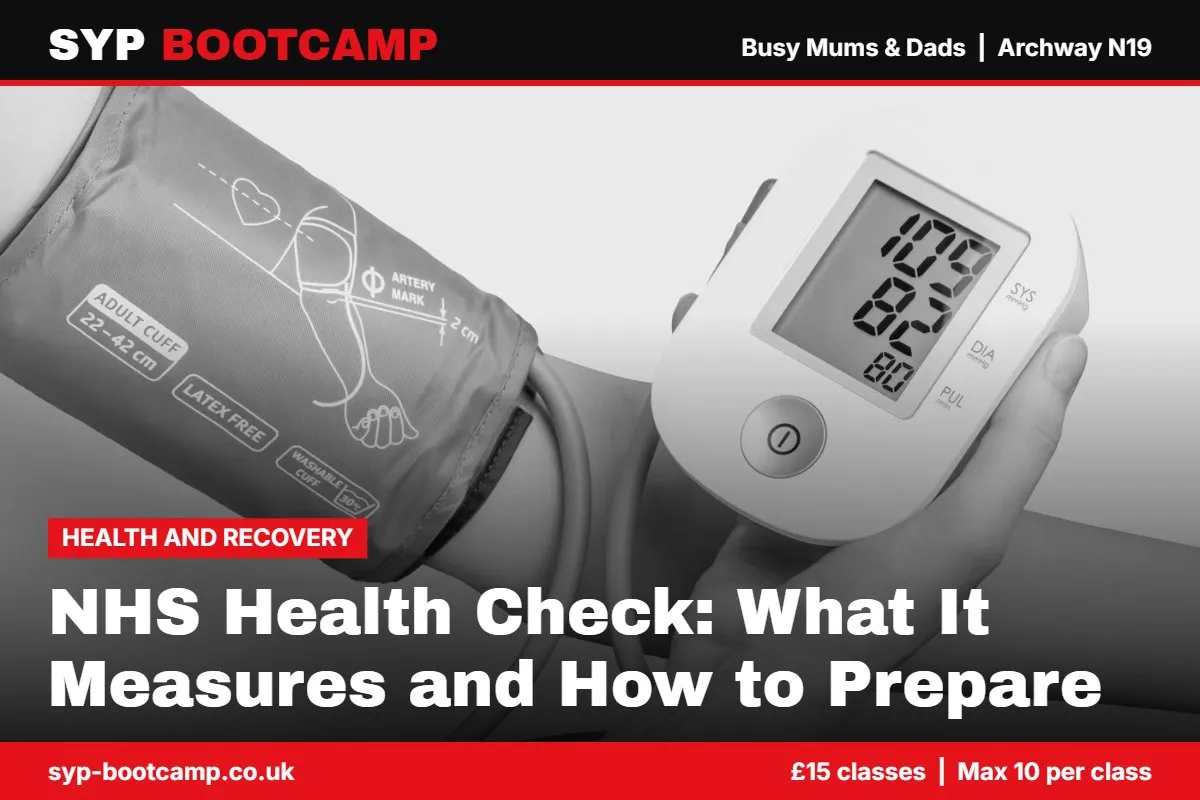
- Take your blood pressure.
- Check your cholesterol, usually with a finger-prick test or a blood sample.
- Possibly check your blood sugar, depending on your results and risk.
You will then usually be told your risk of developing heart disease or a stroke over the next 10 years, and given personalised advice. If you are 65 to 74, you may also be given information about the signs of dementia.
How to prepare (it is easy)
- Find out your family history. Ask parents or siblings if anyone has had heart disease, a stroke, diabetes or high blood pressure, and roughly at what age. It is surprisingly hard to remember this on the spot.
- Be honest about alcohol. Count a typical week in units. The NHS guide to calculating alcohol units helps. Nobody is there to judge you.
- Think about your activity. Roughly how many minutes of brisk walking or exercise do you do in a week? Include the school run.
- Write down any medicines you take, and any questions you want to ask.
- Arrive calm. Rushing from the bus with two bags of shopping can bump your blood pressure reading. Leave a few minutes to sit before the appointment.
- Ask if you need to fast. Usually you do not for a finger-prick test, but check your invitation.
After the check: turning results into a plan
This is where it gets useful. Whatever your results, follow the advice your nurse or GP gives you first. If you have been told your blood pressure is high, or you have been referred for further tests, get the go-ahead from your GP before starting a new exercise plan.
If you have been cleared to be more active, here is a simple starting framework I use with parents over 40, based on the NHS physical activity guidelines:
Weeks 1 to 4
- Walk briskly for 20 to 30 minutes on 5 days a week. You should be warm and breathing faster, but able to talk.
- Two short strength sessions of 20 minutes: 2 rounds of 10 sit-to-stand squats, 8 incline push-ups, 10 glute bridges, 10 rows with a resistance band or water bottles, and a 20-second side plank each side.
Weeks 5 to 8
- Build up to 3 rounds on the strength sessions, and add slightly harder variations.
- Add one session with some harder efforts, like a brisk uphill walk or a fitness class.
Keep a note of how you feel and, if your GP recommends it, track your blood pressure at home. Blood Pressure UK has a clear guide to exercise and physical activity if that is your main concern. My posts on exercise and blood pressure and cholesterol and exercise go deeper too.
Where a bootcamp class fits
The health check gives you numbers. A plan you actually stick to is what changes them over time. My SYP Built To Last functional strength class for 35+ was designed for exactly this stage of life: strength for everyday tasks, joint-friendly options and no pressure to keep up with anyone. Classes are small, so I can check in with you about anything your GP has flagged. For more on training in midlife, see fitness for parents over 40.
FAQs
Who can get a free health check on the NHS?
Adults in England aged 40 to 74 who do not already have certain conditions, such as heart disease, stroke, diabetes or kidney disease. Eligible people are usually invited every five years.
How long does the check take?
Usually about 20 to 30 minutes.
Do I need to fast before my NHS Health Check?
Usually not, but it can depend on the type of blood test. Check your invitation letter or ask your GP surgery when you book.
What if I have not been invited?
If you are 40 to 74 and think you are eligible, contact your GP surgery and ask. Some areas also offer checks through pharmacies or community services.
Book your first class
Booked your health check? Good. Now give yourself a regular reason to move. SYP Bootcamp runs 45-minute small-group classes in a church hall in Archway N19, max 10 people and £15 a class, with every exercise scaled to your level. Book your £15 class here, or call or WhatsApp me on 07301 512215 if you want to talk through your results first. If you live up the hill and prefer 1-1 sessions, I also work as a personal trainer in Highgate.
About the author
Artem Olekhnovych is a personal trainer in Archway and the founder of SYP Fitness and SYP Bootcamp. He has coached clients in Archway, Highgate and across North London for over 10 years, and runs small-group bootcamp classes for busy mums and dads. Read reviews from his 1-1 clients.
