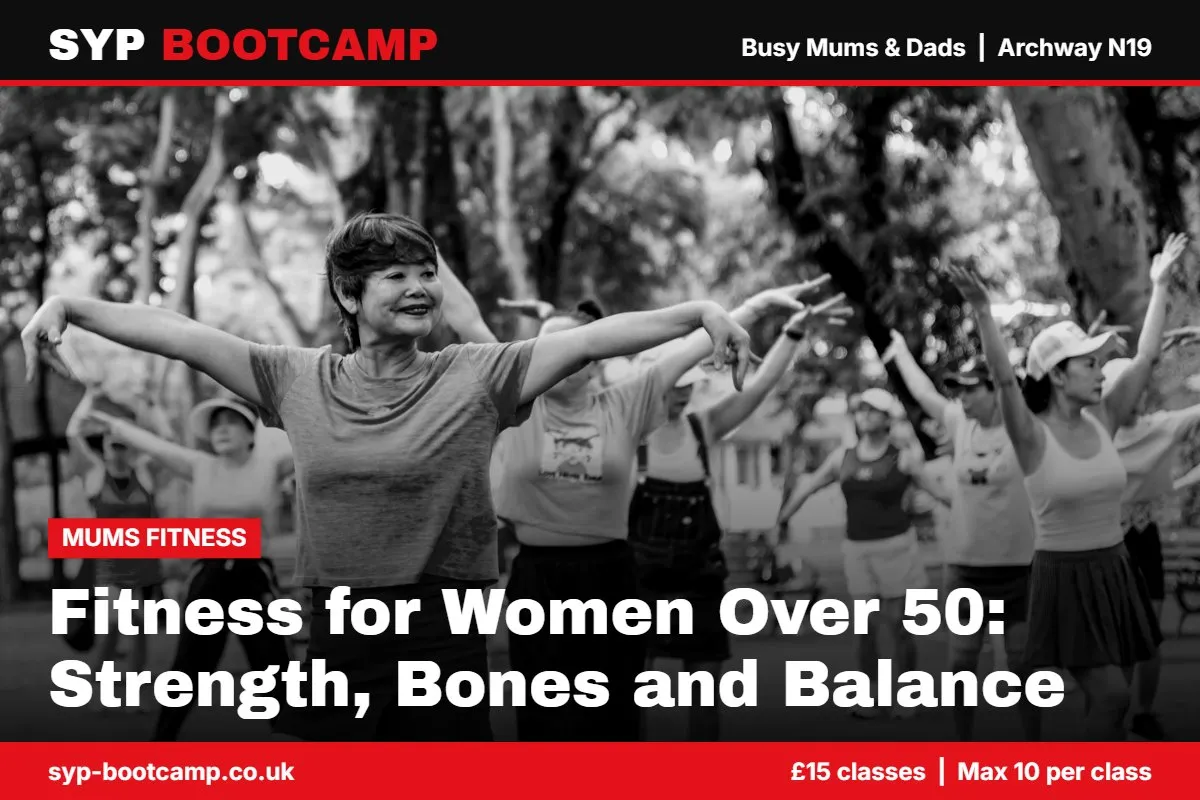
Fitness for Women Over 50: Strength, Bones and Balance
Turning 50 does something funny to how people talk about your body. Suddenly it is all “be careful”, “take it easy” and “at your age”. I understand the worry, but in my experience it gets things backwards. Fitness for women over 50 is not about doing less. It is about doing the right things: getting stronger, keeping your balance sharp and giving your bones a reason to stay strong. Done sensibly, this is one of the best decades to start.
Below is the approach I use with women in their 50s and 60s, including a simple twice-a-week plan you can do at home. If you have a diagnosed condition such as osteoporosis, heart problems, high blood pressure or a joint replacement, please check with your GP or physio before starting anything new.
The three pillars of fitness for women over 50
1. Strength
Muscle naturally declines with age unless you use it, and the drop in oestrogen around menopause adds to the challenge. The NHS recommends muscle-strengthening activities on at least 2 days a week for all adults, working all the major muscle groups. The NHS strength exercises page has some easy home examples.
2. Bones
Bone density also falls after menopause, which raises the risk of osteoporosis. The NHS says regular weight-bearing exercise and resistance exercise are important for helping to prevent osteoporosis. The Royal Osteoporosis Society explains that bones respond best to a mix of impact and muscle strengthening, at a level that is right for you, in its guide to exercise for bones. If you already have osteoporosis or have had a fracture, get guidance from your GP or physio on what level of impact is safe for you.
3. Balance
Balance is the pillar most people forget until they wobble on a kerb. It is very trainable. The NHS has a set of balance exercises you can do at home, and a few minutes a few times a week makes a noticeable difference.
A simple twice-a-week home plan
Do this on two non-consecutive days, for example Tuesday and Friday. Warm up with 5 minutes of marching, arm circles and gentle hip circles. Rest 60 to 90 seconds between sets.
| Exercise | Sets x reps | Easier option |
|---|---|---|
| Sit-to-stand or goblet squat | 3 x 10 | Use a higher chair |
| Wall or counter push-up | 3 x 8 to 12 | Stand closer to the wall |
| Bent-over row (dumbbells or bags) | 3 x 10 each arm | Support one hand on a table |
| Step-ups onto the bottom stair | 2 x 8 each leg | Hold the banister |
| Glute bridge | 3 x 12 | Smaller range |
| Farmer’s carry (heavy shopping bags) | 3 x 30 seconds | Lighter bags |
Finish with a balance block: stand on one leg near a worktop for 20 to 30 seconds each side, then heel-to-toe walk along the hallway for 10 steps, twice. Hold on if you need to.
When 12 reps feel easy, add a little weight. That gradual increase is what drives progress. If you want to understand the bone side more deeply, read my posts on strength training for bone health and strength training for osteoporosis.
Adding impact, carefully
If you have no bone or joint issues and your GP is happy, small amounts of impact can be added once you are comfortable with the strength plan. Start tiny: 10 heel drops (rise onto your toes, drop down onto your heels), a few small jogs on the spot, or marching with a firm step. Build from there over weeks. Stop if anything hurts, and remember impact is not compulsory. Strength and walking still do a lot of good.
What about cardio?
Walking is brilliant and underrated. The NHS suggests 150 minutes of moderate activity a week for adults, and brisk walking counts. Make some of your walks hilly if you can. In North London that is not hard to find. Cycling, swimming and dancing all count too, though swimming and cycling do not load the bones much, so keep the strength work going alongside them.
Common mistakes I see
- Only doing cardio. Great for the heart, not enough for muscle and bone on its own.
- Weights that are too light for too long. Pink 1kg dumbbells are fine for week one. By week six you probably need more.
- Skipping the warm-up. Joints and tendons appreciate 5 minutes of easing in.
- Going it alone with pain. Aches that change your movement or hang around need a GP or physio check, not just more stretching.
Where a small-group class fits
Lots of women in their 50s tell me the hardest part is not knowing if they are doing it right. That is where a coached class helps. In my small groups (never more than 10 people) I can watch your squat, adjust your row and tell you when it is time to go heavier. Every exercise has an easier and harder option, so you can work at your own level beside people of different ages.
The SYP Built To Last functional strength class was designed with this exact group in mind: strength, balance and real-life movements like carrying, getting up off the floor and climbing stairs.
FAQs
Is it too late to start strength training at 50?
No. Muscles respond to training at any age. Start light, learn the movements properly and build gradually. If you have health conditions, speak to your GP first.
How often should a woman over 50 exercise?
The NHS guidelines for adults suggest 150 minutes of moderate activity a week plus strength work on at least 2 days. Most women do well with 2 strength sessions, regular walking and a little daily balance practice.
Is it safe to lift weights with osteoporosis?
Many people with osteoporosis can and should do strength training, but the right exercises depend on your bone health and any fractures. Get advice from your GP or a physio, and see the Royal Osteoporosis Society guidance.
Should I do high-impact exercise after 50?
Some impact can help bones, but it must be appropriate for you. Build up slowly from small movements like heel drops, and check with your GP if you have osteoporosis, joint problems or pelvic floor concerns.
Book your first class
If you would like to get stronger with someone watching your form, come along. SYP Bootcamp runs 45-minute small-group classes in a church hall in Archway N19, indoors and weatherproof, with a maximum of 10 people, for £15 a class. Book your £15 class here, or call or WhatsApp me on 07301 512215 with any questions first. If you are managing an old injury or joint issue and want closer attention, my injury-safe personal training in Archway might suit you better.
About the author
Artem Olekhnovych is a personal trainer in Archway and the founder of SYP Fitness and SYP Bootcamp. He has coached clients in Archway, Highgate and across North London for over 10 years, and runs small-group bootcamp classes for busy mums and dads. Read reviews from his 1-1 clients.
