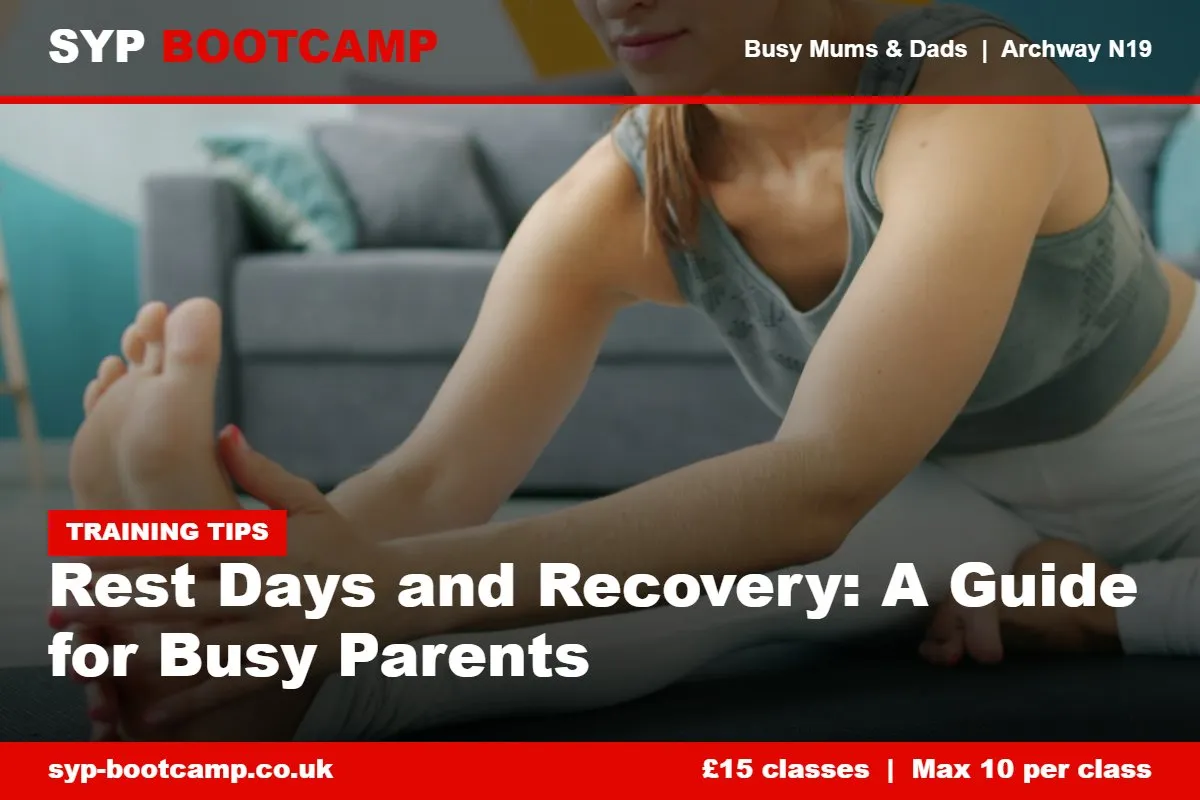
Rest Days and Recovery: A Guide for Busy Parents
If you are a parent, the idea of a “rest day” can sound like a joke. There is no rest day from the school run, the washing or the 3am wake-ups. But when it comes to training, rest days and recovery are not a luxury. They are the part of the week where your body actually adapts to the work you did. Skip them and you tend to feel flat, sore and fed up. Plan them well and your sessions feel better, you get injured less and you are far more likely to keep going. I have been coaching in Archway for over 10 years, and this is how I explain recovery to the tired mums and dads I train.
Why rest days and recovery matter
Exercise is a good kind of stress. When you do a strength session or a hard class, you put your muscles, joints and nervous system under load. The improvement does not happen during the session itself. It happens afterwards, while you rest, eat and sleep.
If you keep stacking hard sessions on top of each other without enough recovery, a few things tend to happen:
- Your performance stalls or drops, even though you are working harder.
- Niggles in knees, shoulders or lower back start to creep in.
- You feel more tired, not less, which is the last thing a parent needs.
- Motivation dips, and that is usually when people quit altogether.
For parents, your “recovery budget” is already being spent on broken sleep, carrying kids and running a household, so you often need a little more recovery, not less.
How many rest days do you actually need?
There is no single magic number, and it depends on how hard you train, your sleep and your stress. As a general starting point for busy parents:
- Two or three hard sessions a week is plenty for most people. A bootcamp class or a strength workout counts as a hard session.
- Leave at least one day between hard sessions that work the same muscles, especially when you are new to training.
- Keep moving on the other days. A rest day from hard training is not a day on the sofa. Walks, playing in the park and taking the stairs all count.
This fits with the NHS physical activity guidelines for adults, which recommend at least 150 minutes of moderate activity or 75 minutes of vigorous activity a week, strengthening activities on at least 2 days, and spreading activity across the week (4 to 5 days or more). You can hit that with a couple of harder sessions plus plenty of easy movement in between.
Active recovery ideas for busy parents
Active recovery just means gentle movement that helps you feel looser without adding much fatigue. The good news is that most of it fits into family life:
- A brisk walk. Walk the school run, push the buggy up the hill or take the long way to the shops. 20 to 30 minutes is a great recovery day.
- Five minutes of mobility. A few slow hip circles, cat-cow stretches, deep squats holding onto a door frame and arm circles while the kettle boils.
- Easy play. Kicking a ball about or a slow bike ride with the kids keeps you moving without draining you.
Keep it easy. If you finish an active recovery day feeling wiped out, it was not recovery.
The three pillars of recovery: sleep, food and stress
Sleep. You cannot always control how much sleep you get with young kids, and I would never pretend otherwise. But you can protect what you have. The NHS Every Mind Matters advice on sleeping better suggests keeping a regular routine, avoiding screens for about an hour before bed and keeping your bedroom quiet, dark and cool. On nights after a bad sleep, pull the intensity of your next session down a notch. I go into this more in my post on exercise and sleep.
Food. Your body needs fuel to repair. Aim for a proper meal with some protein, some carbohydrate and some vegetables within a few hours of training.
Stress. Work deadlines, money worries and family stress all draw on the same reserves as training. In a heavy week, it is completely fine to train lighter or swap a hard session for a walk.
Signs you need an extra rest day
- Muscle soreness is still strong three or more days after a session.
- Weights that normally feel fine suddenly feel very heavy.
- You are dreading training, which is unusual for you.
- You are getting more colds or feel run down.
Some soreness after a new workout is normal. If you want to understand it better, read my guide to muscle soreness after exercise. Sharp pain, swelling or pain that is getting worse is different. Stop and check with your GP or a physio before training that area again.
Where a small-group bootcamp fits
One reason I keep SYP Bootcamp classes small, with a maximum of 10 people, is so I can see how everyone is moving on the day. If someone has had a rough night with a teething baby, I can scale their session down rather than let them grind through it. Each class is 45 minutes, so it is a solid hard session that leaves plenty of room in your week for recovery. You can see this week’s class times on the booking page.
FAQs
Is it OK to exercise every day?
Moving every day is great, and the NHS encourages being active daily. The key is not to make every day a hard day. Mix a few harder sessions with easy walks and mobility so your body has time to recover.
Should I train if I am still sore?
Mild stiffness usually eases once you warm up, and gentle movement can help. If you are very sore, train a different area or keep the day easy. Pain that is sharp or getting worse is a reason to stop and get advice from your GP or physio.
What should I do on a rest day?
Walk, stretch gently, play with the kids, eat proper meals and try to get to bed a bit earlier. A rest day is about lowering the intensity, not stopping moving altogether.
Train hard, then recover well
If you want a session that is properly coached and fits around family life, come and try a class. Classes are £15, last 45 minutes and are indoors in Archway, N19, suitable for all fitness levels. Head to the SYP Bootcamp booking page and tap “Book my £15 class”, or message me on WhatsApp on 07301 512215. If you would rather have a fully planned week of training and recovery built around you, you can read about how 1-1 coaching works at SYP Fitness.
About the author
Artem Olekhnovych is a personal trainer in Archway and the founder of SYP Fitness and SYP Bootcamp. He has coached clients in Archway, Highgate and across North London for over 10 years, and runs small-group bootcamp classes for busy mums and dads. Read reviews from his 1-1 clients.
